Some links on this page are affiliate links: if you book through them, we may earn a commission at no extra cost to you. How this works
Visitors reading a menu in Funchal for the first time usually know the words for beef and fish and little else. The island's own dishes are few, and once you know a dozen names, most menus read clearly.
The meats are espetada, beef roasted on a bay-laurel stick; carne de vinha d'alhos, pork marinated for days in white wine and garlic; and picado, small pieces of meat in sauce with fried potatoes. The fish are the black scabbardfish, espada, often served with banana, tuna steak, and grilled limpets. The sides are bolo do caco, the sweet-potato flatbread with garlic butter, and milho, cornmeal, boiled or fried.
The sweets run on sugar-cane honey, from the bolo de mel to the malassadas of Carnival, and the drinks go beyond wine and poncha to a beer-and-pineapple nikita and laranjada, an orange soft drink made since 1872.
Two ways to taste the island's dishes with a guide.
 Most reviewed
 Top rated
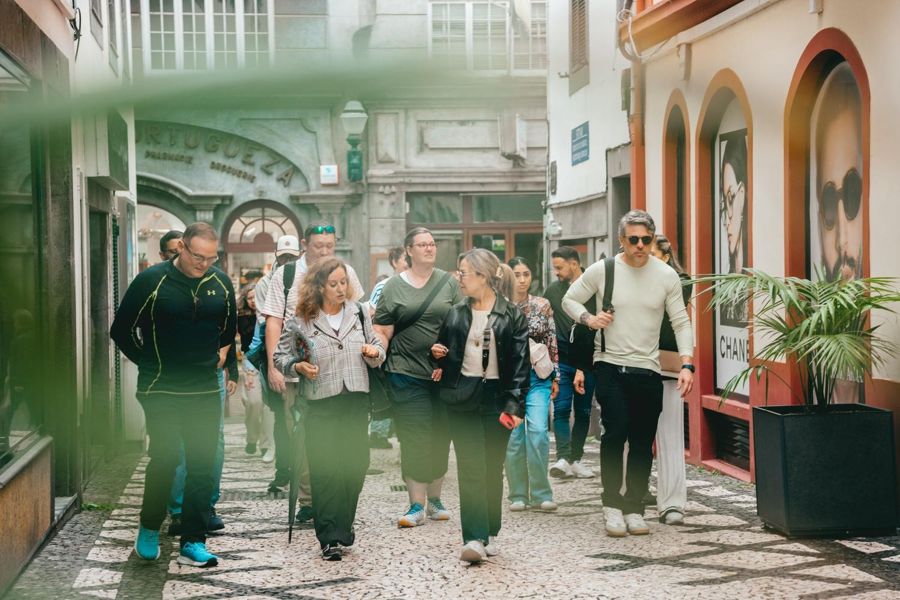
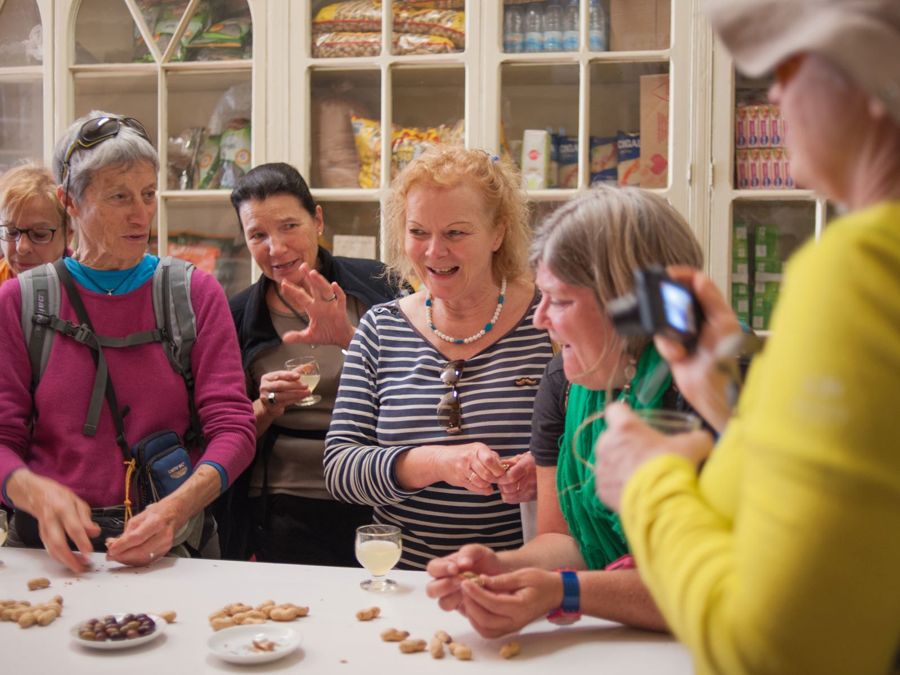
Madeira: Food and Wine Walking Tour in Funchal
Food and wine on foot through the city
Meat: espetada, vinha d'alhos and picado
The common mistake is to expect the grills to be plain. Each meat dish has its own seasoning.
Espetada is chunks of beef on a bay-laurel stick, seasoned with garlic and bay leaf and roasted over charcoal; metal skewers often replace the laurel today. Beef was expensive, so for a long time the dish was eaten only at religious feasts and festivals. It comes with fried cornmeal, and at festivals with wine mixed with laranjada.
Carne de vinha d'alhos is pork marinated for several days in garlic, white wine, bay leaf and spices, then fried. It was traditionally the dish of Christmas Eve and it is still a Christmas favourite, eaten on a plate or in a papo-seco, a bread roll.
Picado regional is small pieces of meat coated in a sauce and served with fried potatoes. And the prego no bolo do caco is a tender steak in the warm flatbread with garlic butter, the island's steak sandwich.
The meat dishes
- Espetada
- Beef on a bay-laurel stick, garlic and bay, charcoal
- Carne de vinha d'alhos
- Pork marinated for days in wine and garlic, fried
- Picado
- Small pieces of meat in sauce, fried potatoes
- Prego no bolo do caco
- Steak in the flatbread with garlic butter
- Eaten at Christmas
- Carne de vinha d'alhos
Fish and seafood
Visitors often skip the scabbardfish for a fish they know. It is one of the island's most iconic dishes.
Filete de espada is the black scabbardfish, caught in the deep waters of the Atlantic, and its fishing has a long tradition in Câmara de Lobos, where the boats have gone out for generations. The fillet is traditionally breaded and fried and served with Madeira banana, or with passion fruit. It is tender and delicate.
Bife de atum is tuna steak, marinated for hours and then fried in hot oil, the marinade turning into its sauce.
Lapas, limpets, are molluscs from the island's coastal rocks, grilled in a pan with garlic, butter, parsley and lemon and served as a starter, still in their shells in the pan, with bolo do caco to wipe up the butter.
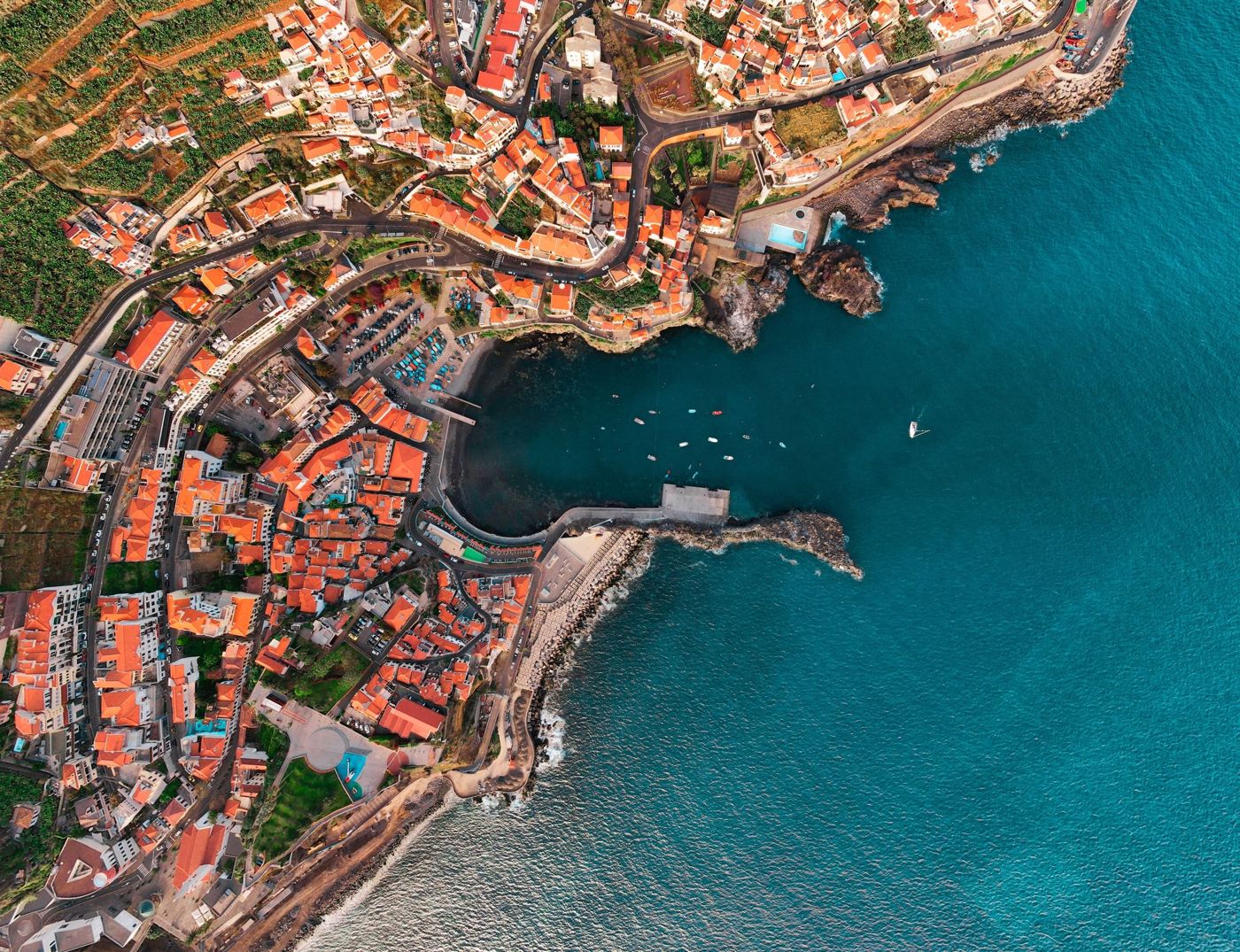
Câmara de Lobos, 14 minutes west of Funchal, holds a festival for the black scabbardfish in its bay; in 2026 it ran from 6 to 9 August.
A Madeiran menu, translated
| On the menu | What it is |
|---|---|
| Espetada | Beef roasted on a bay-laurel stick |
| Carne de vinha d'alhos | Pork marinated in white wine and garlic, fried |
| Picado | Small pieces of meat in sauce with fried potatoes |
| Filete de espada | Black scabbardfish fillet, fried, with banana |
| Bife de atum | Tuna steak, marinated and fried |
| Lapas | Limpets grilled with garlic, butter and lemon |
| Bolo do caco | Sweet-potato flatbread with garlic butter |
| Milho frito | Fried cornmeal |
| Sopa de trigo | Wheat soup with pork and vegetables |
- What it is
- Beef roasted on a bay-laurel stick
- What it is
- Pork marinated in white wine and garlic, fried
- What it is
- Small pieces of meat in sauce with fried potatoes
- What it is
- Black scabbardfish fillet, fried, with banana
- What it is
- Tuna steak, marinated and fried
- What it is
- Limpets grilled with garlic, butter and lemon
- What it is
- Sweet-potato flatbread with garlic butter
- What it is
- Fried cornmeal
- What it is
- Wheat soup with pork and vegetables
Breads, cornmeal and soup
People often treat the bread as an extra. On Madeira it is part of the meal.
Bolo do caco is a flatbread made with flour and sweet potato, which gives it its soft texture, and it was cooked on a very hot basalt stone, the caco, for a crisp crust and a light inside. It is served warm with garlic and parsley butter, sometimes filled with chorizo or cheese, beside an espetada or around a steak as a prego.
Milho is cornmeal: milho cozido, boiled, is creamy and served hot, and milho frito is the fried version, the usual side for an espetada.
Sopa de trigo is a creamy wheat soup with a rich flavour, made with pork and vegetables.
Order the bolo do caco with any grill or with the limpets.
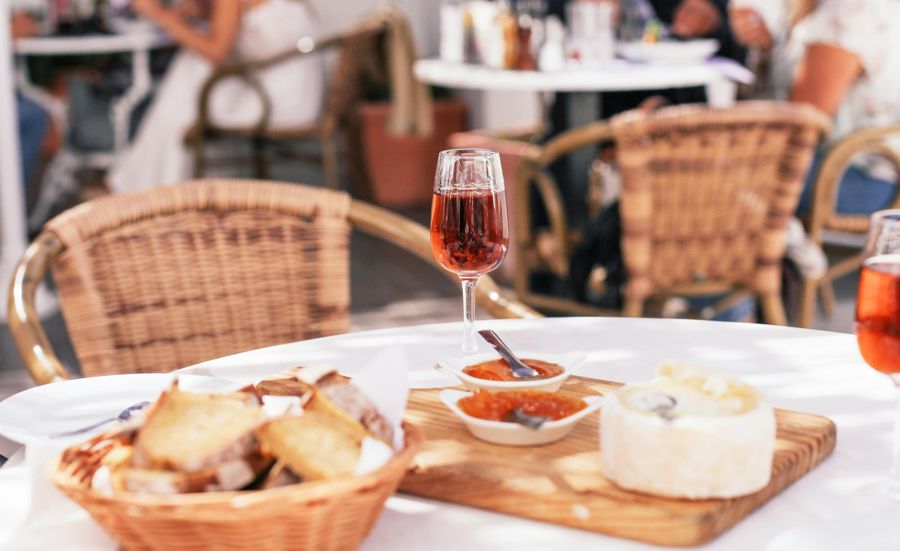
Funchal: Self-Guided Gourmet Tapas Food Tour
★ 4.8 · 138 reviewsA self-guided tapas route through Funchal, for the dishes at your own pace.
Sweets
The mistake is to order a pastry from the mainland. The island's sweets are its own, and many belong to a season.
Bolo de mel, the honey cake, dates from the 15th century, when Madeira was one of the world's largest sugar producers. It is made with sugar-cane honey, butter, lard, walnuts, spices, Madeira wine and candied peel, fermented for up to three days, and it keeps for months. Broas de mel are its biscuits, crunchy outside and soft inside. Both belong to Christmas, as do the palitos de cerveja, a broa made with beer.
Malassadas are the sweet of Carnival: fried dough with a golden crust and a soft inside, finished with sugar-cane honey. Bolo preto is a dark cake of cane honey, Madeira wine, beer, cinnamon and candied fruit.
The fruit desserts use the island's crops: pudim de maracujá, passion fruit pudding, and mousse de anona, cherimoya mousse. And queijada da Madeira is a flat tart of curd cheese, eggs and sugar. For a sweet to take home, rebuçados de funcho are handmade fennel sweets, yellow-orange in colour.
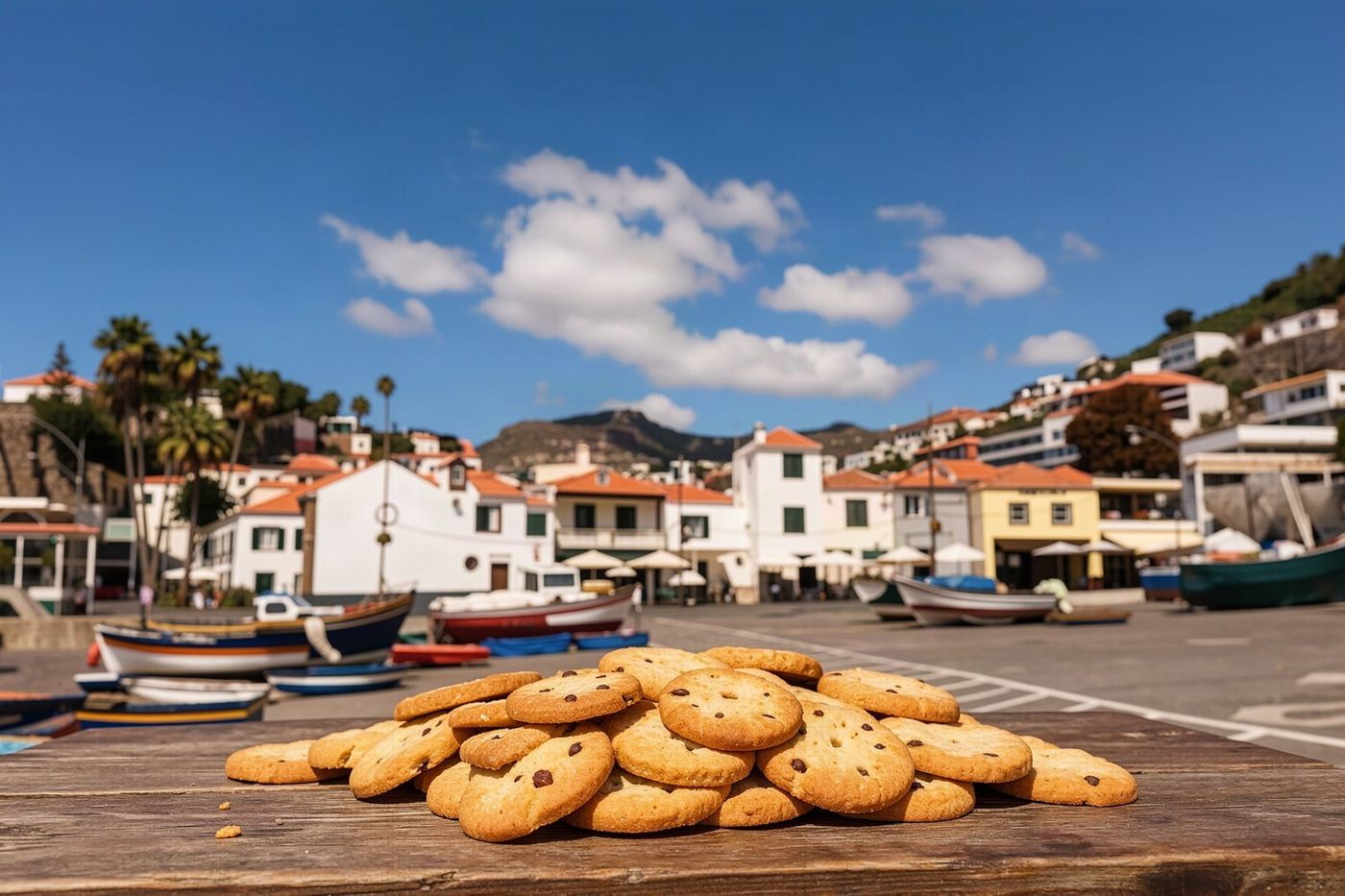 Broas de mel are crunchy outside and soft inside Christmas biscuits belonging to the island's tradition.
Drinks
People often think the island drinks only wine. Its drinks cupboard is wider.
Madeira wine and poncha come first: the fortified wine tasted in the lodges of Funchal, and the cane-spirit drink with honey, sugar and lemon from Câmara de Lobos. Madeira rum itself is made only from sugar-cane juice, at 37.5% or more, and certified, like the wine, by IVBAM, the island's wine and crafts institute.
Nikita is a cold, creamy mix of ice cream, pineapple, pineapple juice and pale beer. Laranjada, created on Madeira in 1872, is one of the oldest soft drinks in the world, sparkling, with the taste of orange peel. Brisa Maracujá is a passion-fruit soft drink made with purple passion fruit and lightly sparkling water, and Coral is the island's lager.
From the Nuns Valley comes licor de ginja, a liqueur of ginjas, a fruit like cherries, steeped in brandy and sugar.
The poncha guide and the wine guide go further on the two classics.
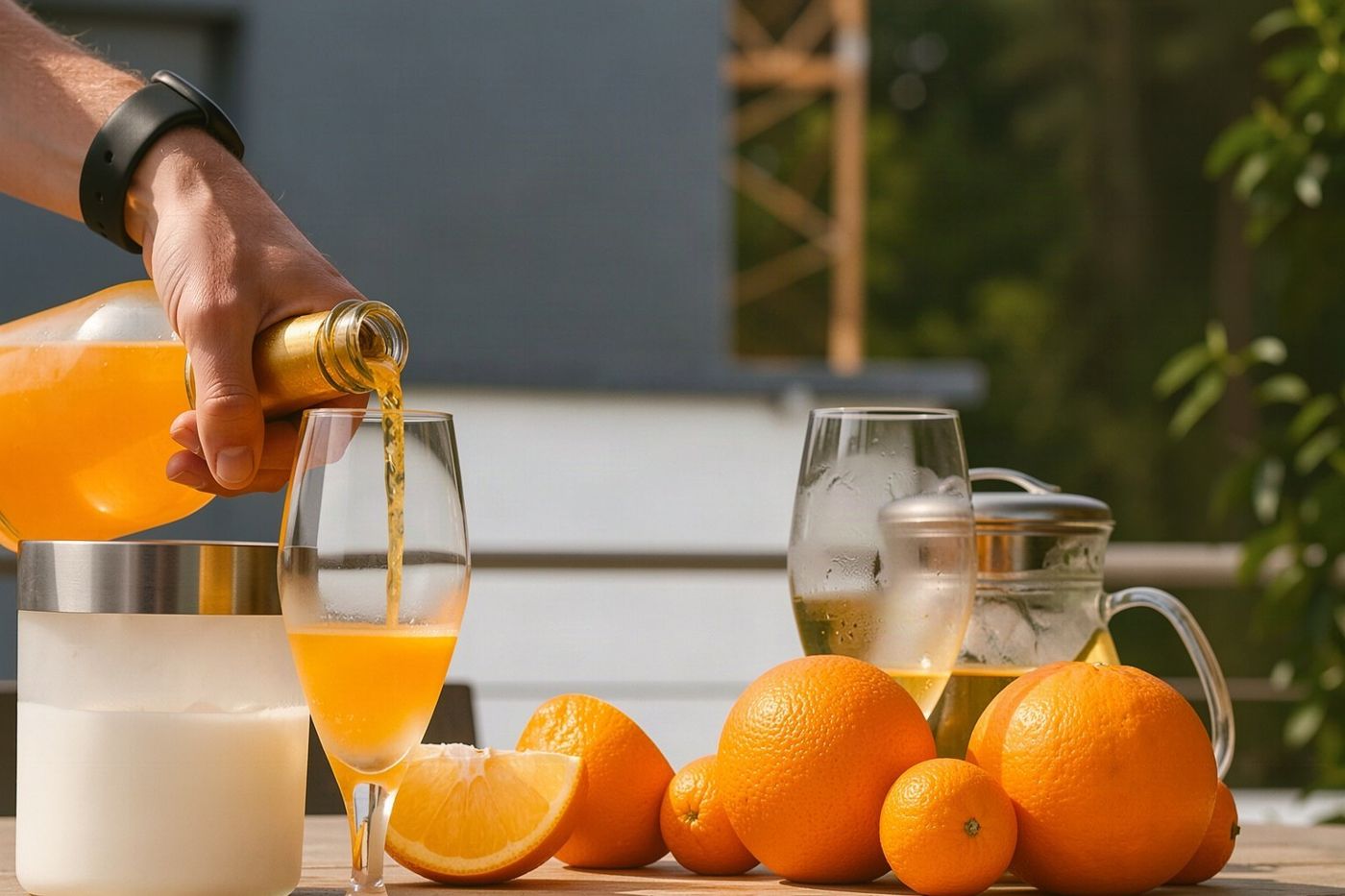 Laranjada is one of the oldest soft drinks in the world having been created on Madeira in 1872.
Dishes of the seasons
Visitors often find a dish on one visit and not the next. Several belong to a time of year.
At Christmas, carne de vinha d'alhos is the traditional dish of Christmas Eve, and the bolo de mel, the broas de mel and the palitos de cerveja come out. On 23 December, the market night opens the Mercado dos Lavradores for the evening. At Carnival, in February, the malassadas are fried and sold.
In summer, the festivals bring the stalls of espetada, bolo do caco and poncha, and Câmara de Lobos holds its black scabbardfish festival in August. In early November, the Nuns Valley holds its chestnut festival; chestnuts are the valley's delicacy.
On Porto Santo, the lambecas are the island's ice creams, a symbol of the place.
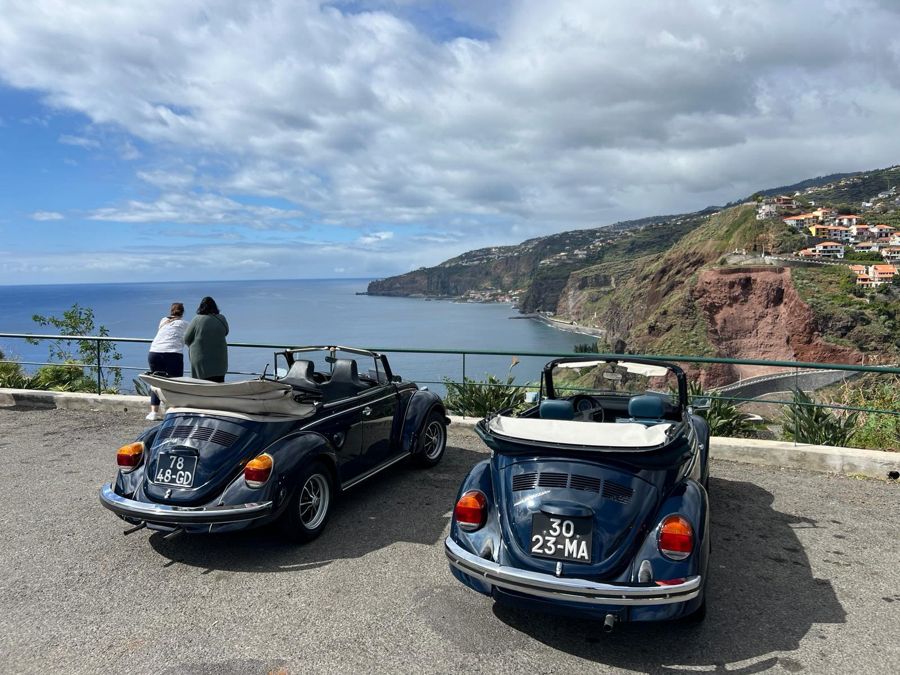
From Funchal: Cabo Girão & Poncha Tasting by Classic VW
★ 5.0 · 90 reviewsCabo Girão and a poncha tasting by classic VW, a short afternoon from Funchal.
Ordering well
The common mistake is to order the famous dish anywhere. A little choice goes a long way.
For espetada, choose a place that grills over charcoal. For the black scabbardfish, go to Câmara de Lobos, where the fishing tradition lives on. For limpets, order them as a starter to share, with bolo do caco.
Ask for bolo do caco with any grill, and a milho frito with the espetada. Leave room for a slice of bolo de mel, or a pudim de maracujá, and finish with a Madeira wine or a poncha.
Funchal's restaurants serve most of these dishes. The where to eat guide sorts the city by area, and Visit Madeira describes the island's gastronomy dish by dish; the food guide has the ingredients and the market.
Common questions
What is espada com banana?
Black scabbardfish, a deep-sea fish long fished from Câmara de Lobos, breaded and fried and served with Madeira banana.
What is carne de vinha d'alhos?
Pork marinated for several days in garlic, white wine, bay leaf and spices, then fried. It is the traditional dish of Christmas Eve.
What is nikita?
A cold drink of ice cream, pineapple, pineapple juice and pale beer.
What are malassadas?
Fried sweets made at Carnival, with a golden crust, a soft inside and a finish of sugar-cane honey.