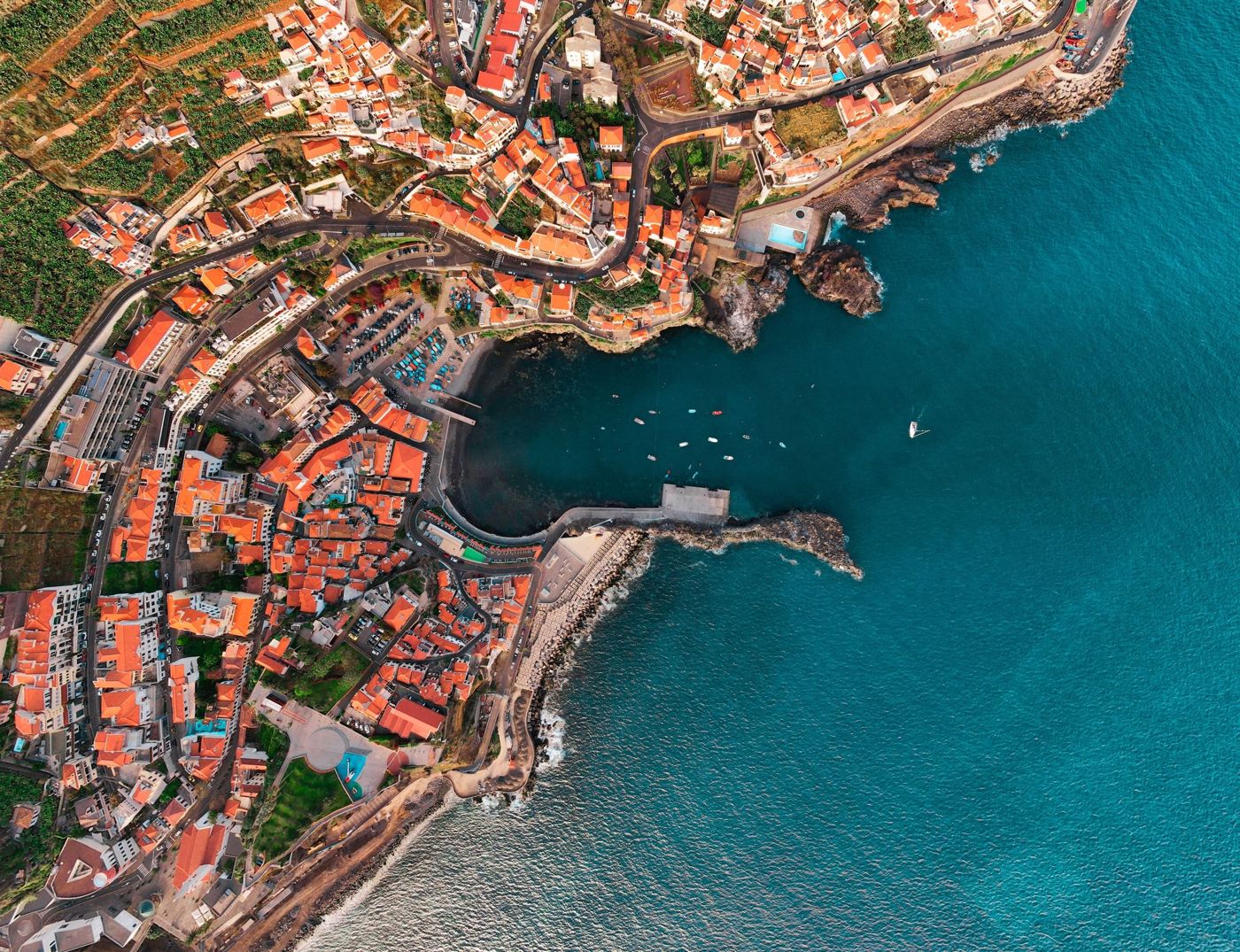
Some links on this page are affiliate links: if you book through them, we may earn a commission at no extra cost to you. How this works
Visitors sitting down to their first meal in Funchal often find a menu of names they do not know: espetada, bolo do caco, espada, lapas, milho frito. Madeira food is the cooking of an island of farms and fishermen, and those five cover most of it.
Espetada is beef roasted on a bay-laurel stick over charcoal. Bolo do caco is a flatbread made with sweet potato and cooked on a hot basalt stone, eaten warm with garlic butter. Espada is the black scabbardfish from the deep Atlantic, fried and often served with banana. Lapas are grilled limpets, and milho frito is fried cornmeal.
Around them come the island's sweets, made with sugar-cane honey; its fruit, from the small Madeira banana to passion fruit and anona; and its two drinks, Madeira wine and poncha. Eating out is moderate: the commonest price band in Funchal's restaurants is €10 to €15.
Two food tours of Funchal that put the dishes and drinks in order.
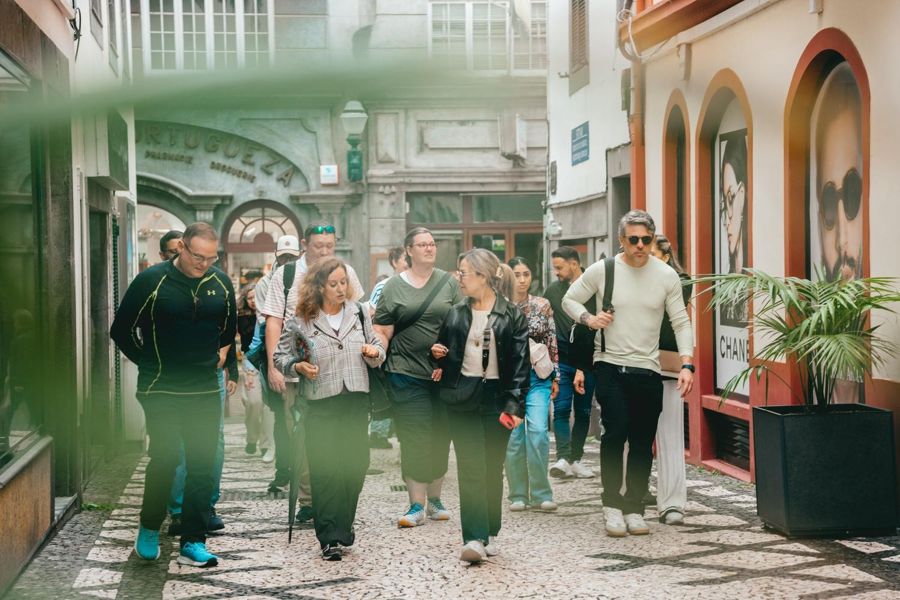 Most reviewed
Taste Funchal: food, wine and cultural tour
The market, tastings and the city's food
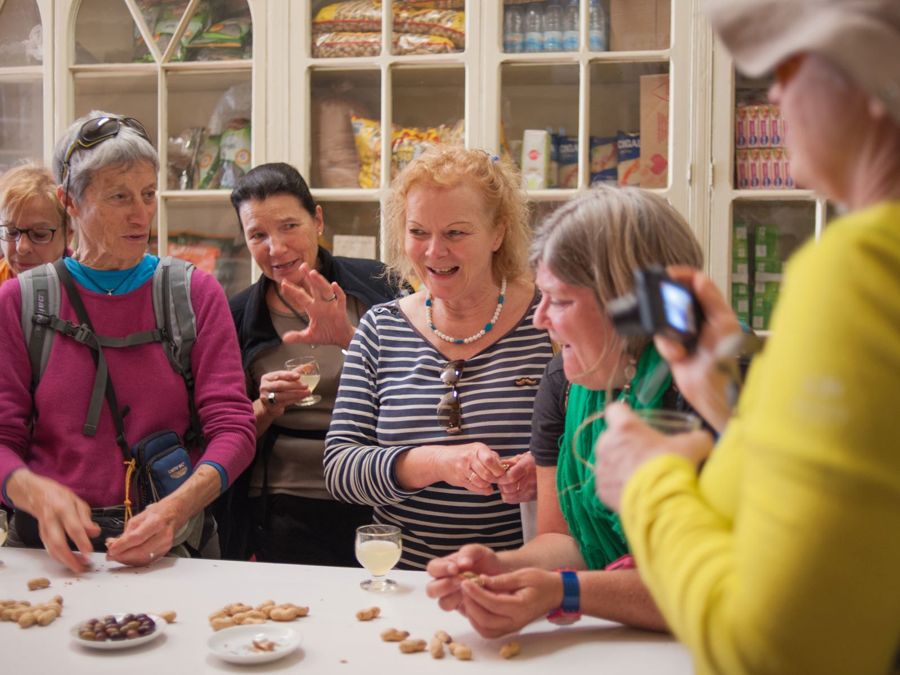 Top rated
The dishes to try first
The common mistake is to order what you would order at home. The island's own dishes are easy to find.
The best food in Madeira to start with is its three signature dishes. Espetada: chunks of beef on a bay-laurel stick, seasoned with garlic and bay leaf and roasted over charcoal; metal skewers often replace the laurel now. It was once a dish for religious feasts and festivals only, because beef was dear.
Bolo do caco: a soft flatbread made with sweet potato, cooked on a very hot basalt stone, the caco, and served warm with garlic and parsley butter. It comes beside the espetada, or as the base of the prego no bolo do caco, a steak sandwich.
Filete de espada: the black scabbardfish, caught in the deep Atlantic by the fishermen of Câmara de Lobos for generations, breaded and fried and served with Madeira banana or passion fruit.
Order the three over two meals, not one: espetada and bolo do caco together, and the fish on its own. Visit Madeira describes each of the island's dishes.
- Espetada
- Beef on a bay-laurel stick, over charcoal
- Bolo do caco
- Sweet-potato flatbread with garlic butter
- Espada
- Black scabbardfish, with banana
- Sweets
- Bolo de mel and broas, with cane honey
- Drinks
- Madeira wine and poncha
The ingredients
People often read the island's dishes as simple grills. The flavour comes from a few local ingredients.
The Madeira food ingredient to know first is sweet potato, which gives bolo do caco its soft texture. Bay laurel flavours the espetada, and garlic runs through the cooking, from the garlic butter on the bread to the carne de vinha d'alhos, pork marinated in white wine and garlic.
Sugar cane gave the island its wealth in the 15th century, and it still gives the kitchen its honey: sugar-cane honey sweetens the bolo de mel, the broas and the poncha. The sea gives the black scabbardfish, tuna for the bife de atum, marinated and fried, and limpets. Cornmeal makes milho cozido and milho frito, and wheat the sopa de trigo, a creamy soup with pork and vegetables.
And the fruit: the Madeira banana, a Protected Geographical Indication, grown mainly on the south coast, and the passion fruit and anona that turn up in desserts and drinks.
The island's food at a glance
- Signature dishes
- Espetada, bolo do caco, espada
- Starters
- Grilled limpets, milho frito
- Sweets
- Bolo de mel, 15th-century recipe; broas de mel
- Protected product
- Banana from Madeira, PGI
- Commonest price band
- €10-15 in Funchal's restaurants
What the island's cooking is
Visitors often expect Portuguese mainland cooking. Madeira has its own, shaped by its farms, its fishing and its sugar.
What is Madeira food at heart? Farm cooking of the mountains and sea cooking of the coast. From the farms come beef for the espetada, pork for the vinha d'alhos and the picado, small pieces of meat in sauce with fried potatoes, and cornmeal and wheat for the milho and the soups. From the sea, the black scabbardfish, tuna and limpets.
The island's sugar past runs through it too. Madeira was one of the world's largest sugar producers in the 15th century, when the recipe of the bolo de mel began, and cane honey is still the sweetener of its traditional sweets.
The cooking is direct: charcoal, a marinade, a hot stone. A good meal is a grill, a bread and a glass of wine.
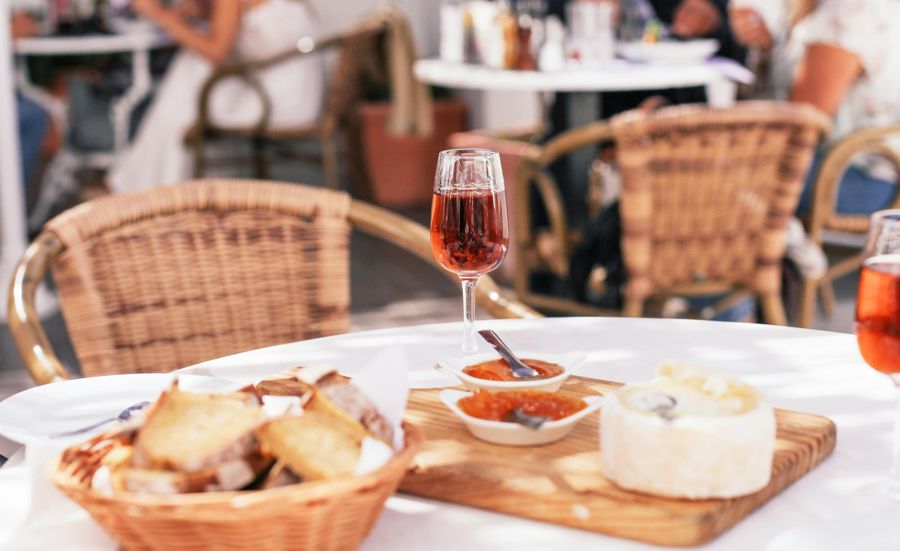
Funchal: Self-Guided Gourmet Tapas Food Tour
★ 4.8 · 138 reviewsA self-guided tapas route through Funchal, at your own pace.
Sweets and drinks
People often skip dessert and miss the sweets that carry the island's history.
The traditional Madeira food for the sweet course is the bolo de mel, the honey cake: sugar-cane honey, butter, lard, walnuts, spices, Madeira wine and candied peel, fermented for up to three days, dense enough to keep for months. Its recipe dates from the 15th century. The broas de mel are its biscuit cousins, crunchy outside and soft inside, and both are Christmas sweets, eaten with a glass of Madeira wine or a coffee.
The drinks are two. Madeira wine, fortified, 17% to 22%, tasted in the lodges of central Funchal. And poncha, the cane spirit with honey, sugar and lemon, stirred with a wooden mexelhote, born in Câmara de Lobos.
At festivals, the espetada is drunk with wine mixed with laranjada, a Madeiran orange soft drink made since 1872. The poncha guide and the wine guide go further.
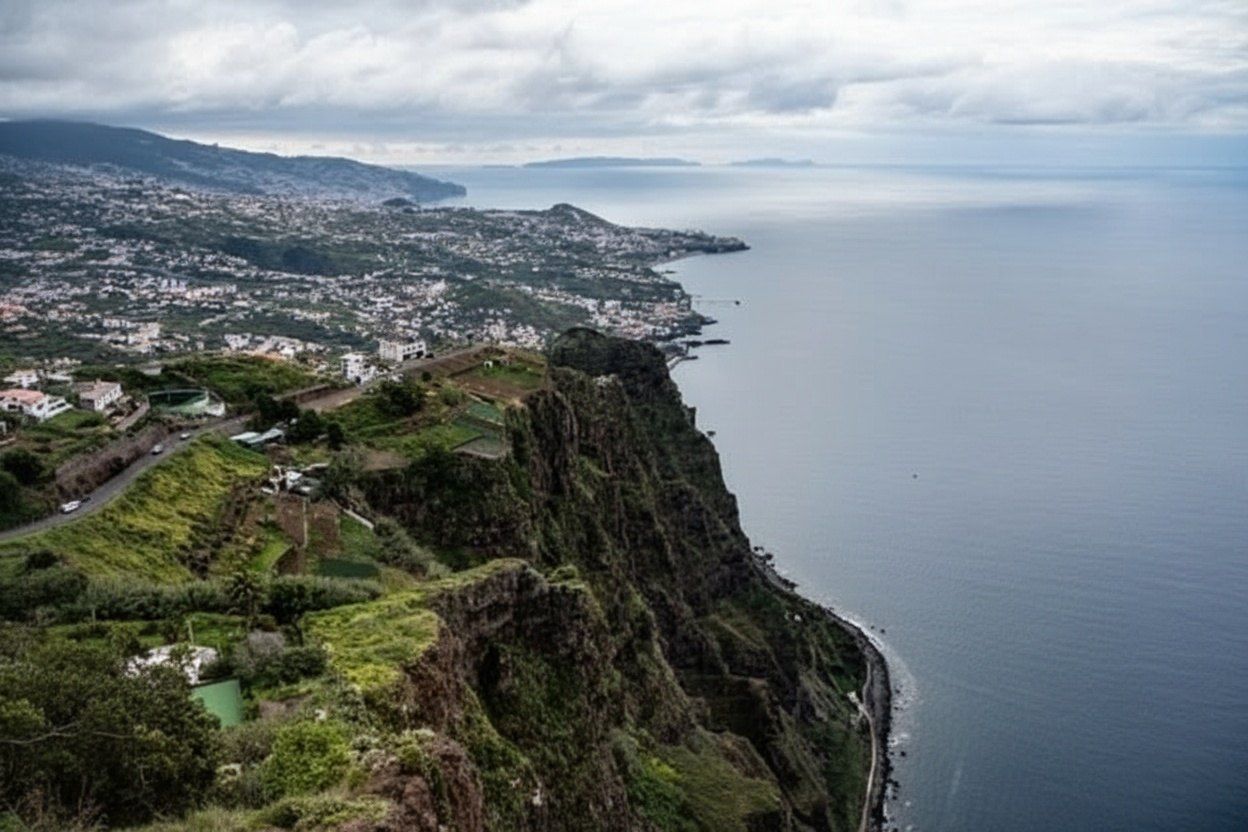 Poncha is a cane spirit mixed with honey sugar and lemon that was born in Câmara de Lobos.
Food in the street and at festivals
Visitors often look for street food stalls and find few in the week. The island eats in the street on festival days.
Madeira street food is at its best at the festivals and markets. At the summer celebrations, the stalls serve espetada, bolo do caco and poncha. In June, the Summer Sunsets market at Praça do Povo runs from Thursday to Sunday, with 13 stalls and music, and in December a Christmas market runs in the city. On 23 December, the Noite do Mercado, the market night, opens the Mercado dos Lavradores for the evening before Christmas.
Câmara de Lobos has its own food festival in the bay: the Festa do Peixe Espada Preto, for the black scabbardfish, ran from 6 to 9 August in 2026.
The rest of the year, the nearest thing to street food is a prego no bolo do caco, the steak in the warm flatbread, from a snack bar, and a poncha at a counter. The festivals guide has the dates.
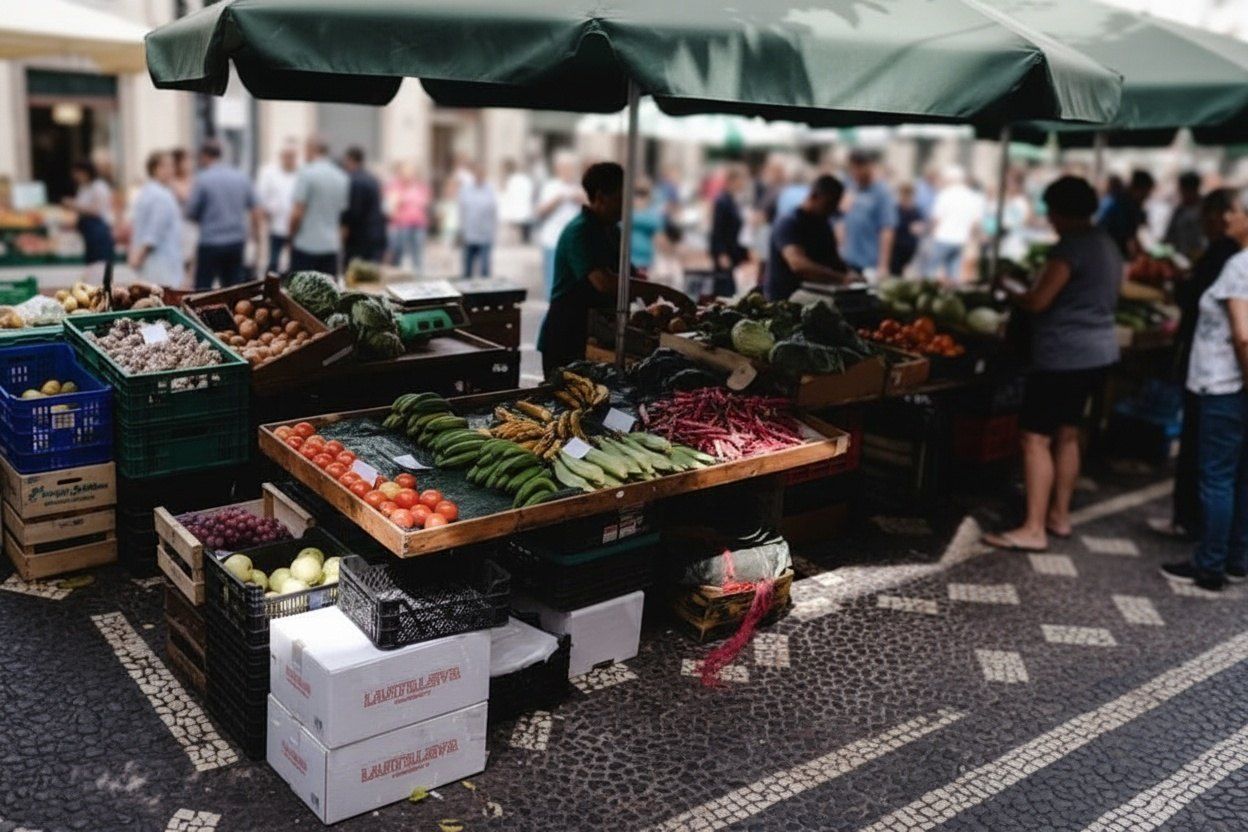 The Summer Sunsets market at Praça do Povo runs from Thursday to Sunday in June with music and stalls.
Where to eat, and what it costs
The mistake is to judge prices by the hotel zone's menus. Across the city, most meals are moderate.
Of Funchal's restaurants with a price band, the commonest is €10 to €15 a head, followed by €5 to €10 and €15 to €20. The old town has 96 restaurants within 450 m of Rua de Santa Maria, the centre around the cathedral 149 within 500 m, and the Lido hotel zone 135 within 1 km.
For the island's own dishes, look for a menu that lists espetada, espada and bolo do caco, and for the fish, go to Câmara de Lobos, 14 minutes west.
The where to eat guide sorts the city's areas, and the restaurants guide picks the places.
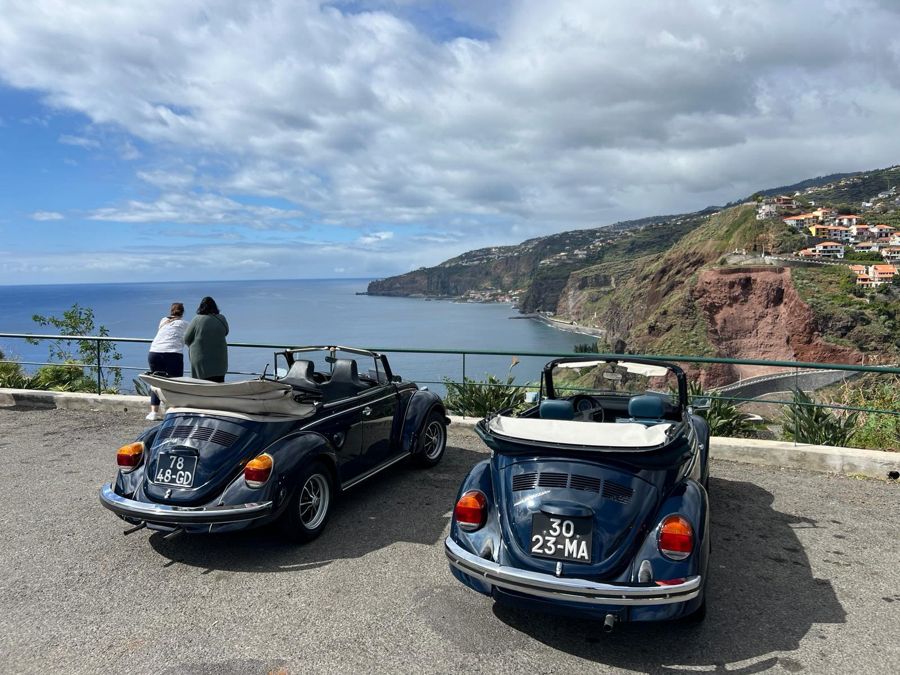
From Funchal: Cabo Girão & Poncha Tasting by Classic VW
★ 5.0 · 90 reviewsCabo Girão and a poncha tasting by classic VW, a short afternoon from Funchal.
The fruit and the market
People often buy fruit at the hotel buffet. The market has the island's own, and the names are worth learning.
The Mercado dos Lavradores, the market of 1940 at the western edge of the old town, opens from 07:00 to 19:00 on weekdays and to 14:00 on Saturdays, and is closed on Sundays. Its halls sell the island's fruit and vegetables, flowers and fish, under tile panels of 1940.
Look for the Madeira banana, sweet and compact, the anona, or cherimoya, with its white, creamy pulp, the passion fruit, used fresh and in drinks, and the fruto delicioso, the fruit of the Monstera deliciosa, sweet and creamy. Chestnuts come in autumn, the delicacy of the Nuns Valley.
Ask the price by the kilo before you buy. The market guide has the hours, and Visit Madeira the island's regional products.
Common questions
What is the most famous food in Madeira?
Espetada, beef roasted on a bay-laurel stick, with bolo do caco, the sweet-potato flatbread, and black scabbardfish with banana.
What is bolo do caco?
A flatbread made with sweet potato, cooked on a hot basalt stone and served warm with garlic and parsley butter.
Is eating out expensive in Funchal?
Not usually: the commonest price band in the city's restaurants is €10 to €15 a head.
What sweets is Madeira known for?
Bolo de mel, the honey cake, and broas de mel, both made with sugar-cane honey and eaten at Christmas.