Some links on this page are affiliate links: if you book through them, we may earn a commission at no extra cost to you. How this works
Most visitors to Funchal meet Madeira wine within a day: a glass after lunch, a tasting in an old lodge in the centre, a bottle in the airport shop on the way home. Few know what they are drinking, and the labels do not help, with words like Sercial and Malvasia, canteiro, Colheita, Frasqueira and "10 years" printed side by side as if everyone already knew them.
It is a fortified wine made only on this island, under rules that the regional wine institute, IVBAM, checks at almost every step. Those rules are what make a label readable. They fix how the wine may be made, how long it must age before it can carry a word or a number, which grape may be named on the bottle and how sweet each named grape must be. Once you know them, a shelf of bottles sorts itself into a handful of clear choices.
Choosing between the lodges has its own page.
The three wine visits sold from Funchal, side by side: a lodge tour in the centre, a sommelier tasting, and a day among the vineyards.
 Most reviewed
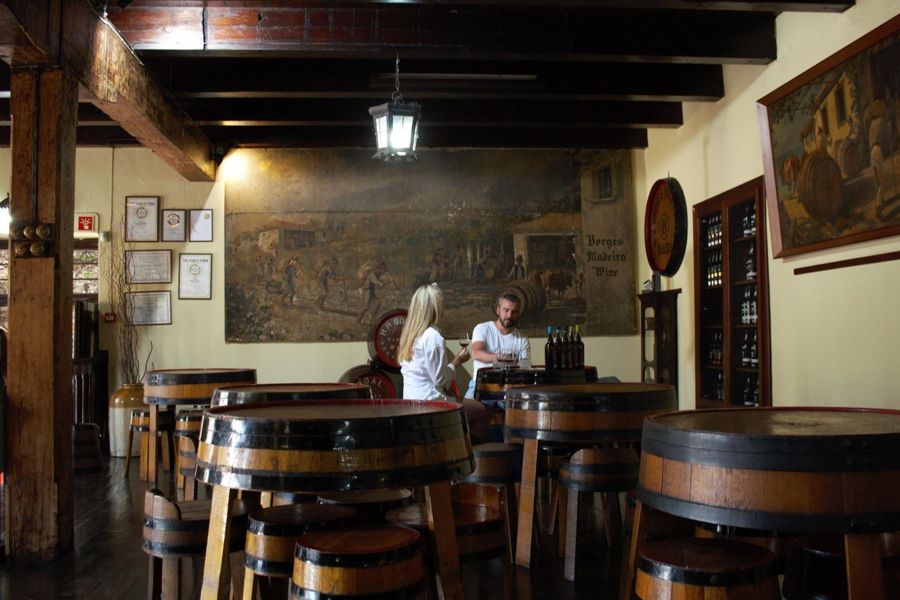
Funchal: H.M. Borges Winery Guided Tour with Wine Tasting
A lodge in the centre, the cheapest of the three
 Sommelier
 Best rated
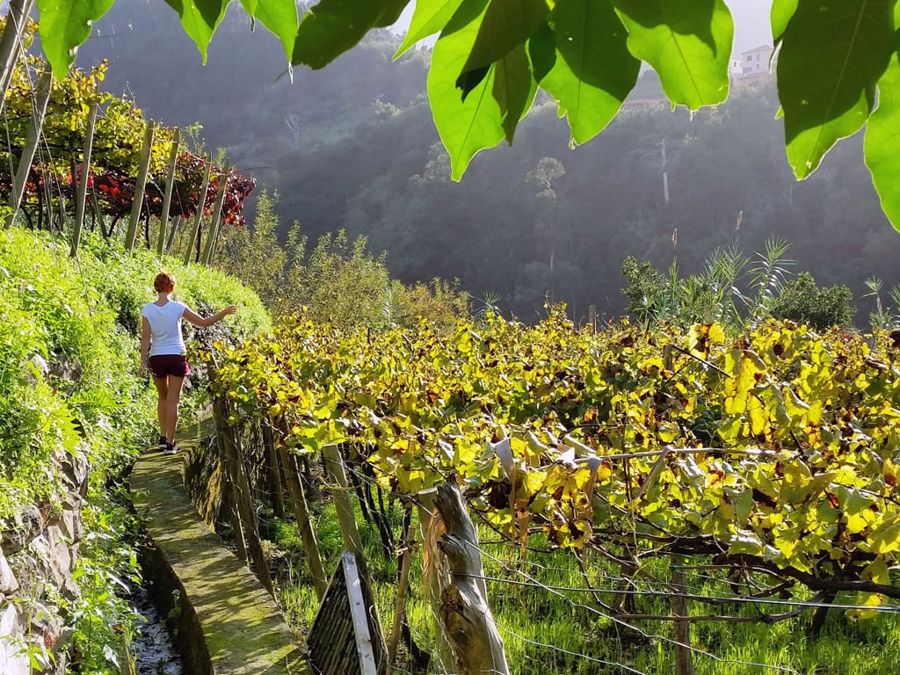
From Funchal: Full-Day Madeira Wine Tour with Lunch
The vineyards themselves, with lunch
A wine made to survive heat and air
The usual mistake is to treat Madeira as a sweet dessert wine, poured with cake and forgotten. Some of it is sweet. Much of it is dry, and a dry Sercial has little in common with the sticky bottle in the back of a kitchen cupboard.
The short answer to what is madeira wine: a wine from grapes grown on Madeira, fortified with grape spirit during or just after fermentation, then aged in a way that exposes it to warmth and time. The regional rules allow two ways of doing that and no others. The first, canteiro, leaves the wine in wooden casks for years. The second, estufagem, warms it in containers for months before it rests.
Fortification stops the fermentation early or strengthens a finished wine, depending on when the spirit goes in. The spirit itself must be a neutral grape spirit of at least 96% alcohol, and the must it goes into needs at least 9% natural alcohol before anything is added. The result sits between 17% and 22% alcohol, stronger than table wine and in the same range as most fortified wines.
Everything sold as Madeira passes the institute's physical, chemical and tasting analysis before it reaches a shop. That is why the words on a Madeira label mean something: a bottle may say Colheita, Frasqueira or 15 years only if the institute has accepted that the wine inside meets the rule.
- Alcohol
- 17% to 22% vol.
- Estufagem
- No more than 50 °C, at least 3 months
- Canteiro
- At least 2 years in wood, bottled after 3 years at the earliest
- Colheita
- One vintage, at least 5 years in cask
- Frasqueira
- One vintage and one grape, at least 20 years in cask
- Grape named on the label
- At least 85% of that grape
Buying a bottle to take home
Visitors often buy the first bottle they see and pay for a name rather than a style. The better order is the other way round: decide how dry or sweet you want the wine, then how old, then pick the house.
For madeira wine where to buy is the easy part: the lodges in the centre of Funchal sell their own bottles after a tasting, which lets you taste before you choose, and every bottle on sale, in a lodge or anywhere else, has passed the same institute analysis. What changes from one shop to another is the range, not the wine inside a given label.
Read three things on the label. The grape, if one is named, tells you the sweetness, because the rules tie each noble grape to one style. The age, as a number of years or a traditional word such as Reserva or Reserva Velha, tells you how long the blend has aged. A vintage year with the word Colheita or Frasqueira tells you the wine comes from one harvest and has spent at least 5 or at least 20 years in cask.
The rules also protect a buyer in a way other wines do not. Madeira with the protected name may not be sold in bulk to the public, and it may be bottled only in glass. A tap, a barrel sale or a plastic container is not the certified wine, whatever the sign says.
How sweet: the Baumé bands
- Extra dry
- 0.5° or less
- Dry
- Under 1.5°
- Medium dry
- 1° to 2.5°
- Medium sweet
- 2.5° to 3.5°
- Sweet
- Over 3.5°
Not a kind of Port
A common confusion sets Madeira beside Port as if one were a version of the other. Both are Portuguese, both are fortified with grape spirit, and both carry age statements. There the likeness ends. Port comes from the Douro Valley on the mainland; Madeira comes from this island, under its own protected name, its own institute and its own rules.
Anyone asking a bar in Funchal for madeira port wine will be poured one or the other, not a blend of the two, and the difference is in how the wine ages. Madeira's rules name canteiro and estufagem, the slow cask ageing and the controlled warming, as the only two ways of making it. Neither has an equivalent in the Port rules.
The styles are named differently too. Port speaks of ruby and tawny. Madeira speaks of its grapes and of sweetness: extra dry, dry, medium dry, medium sweet and sweet, each a band on the Baumé scale that measures the sugar left in the wine. A Sercial must be dry or extra dry; a Malvasia must be sweet.
So the question to ask is not which is better but which style you want. A dry Madeira before a meal and a sweet one after it cover most of what a first visit needs, and both are easy to taste side by side in the lodges of central Funchal.
The grape on the label and the style it must be
| Grape | Style the rules require |
|---|---|
| Sercial | Dry or extra dry |
| Verdelho | Medium dry |
| Boal | Medium sweet |
| Malvasia | Sweet |
| Terrantez | Medium dry or medium sweet |
| Tinta Negra | Any sweetness; not one of the grapes tied to a style |
- Style the rules require
- Dry or extra dry
- Style the rules require
- Medium dry
- Style the rules require
- Medium sweet
- Style the rules require
- Sweet
- Style the rules require
- Medium dry or medium sweet
- Style the rules require
- Any sweetness; not one of the grapes tied to a style
The grapes and what they say about sweetness
The mistake here is to think the grape is a matter of taste only. On a Madeira label it is also a promise about sugar, because the rules link each of the classic grapes to one sweetness and let a producer name a grape only if the wine is at least 85% that grape.
Sercial gives the driest wines, dry or extra dry. Verdelho is medium dry. Boal, sometimes spelled Bual on export labels, is medium sweet. Malvasia, sold abroad as Malmsey, is sweet. Terrantez, rarer than the other four, may be medium dry or medium sweet. The oldest single-vintage wines, the Frasqueiras, may break the pairing only with the institute's tasting panel's approval.
Tinta Negra is the grape most visitors drink without knowing it. It makes about nine in ten bottles of Madeira, and because it is not one of the grapes tied to a style, a Tinta Negra wine can be made at any sweetness. The bottle may say only "dry" or "sweet" and an age, with no grape at all.
Wine writers often sum the island up with a line like madeira wine volcanic soil atlantic island, and the label says none of it. What it does say, grape, sweetness, age and vintage, is regulated, and those are the four things to read before you buy.
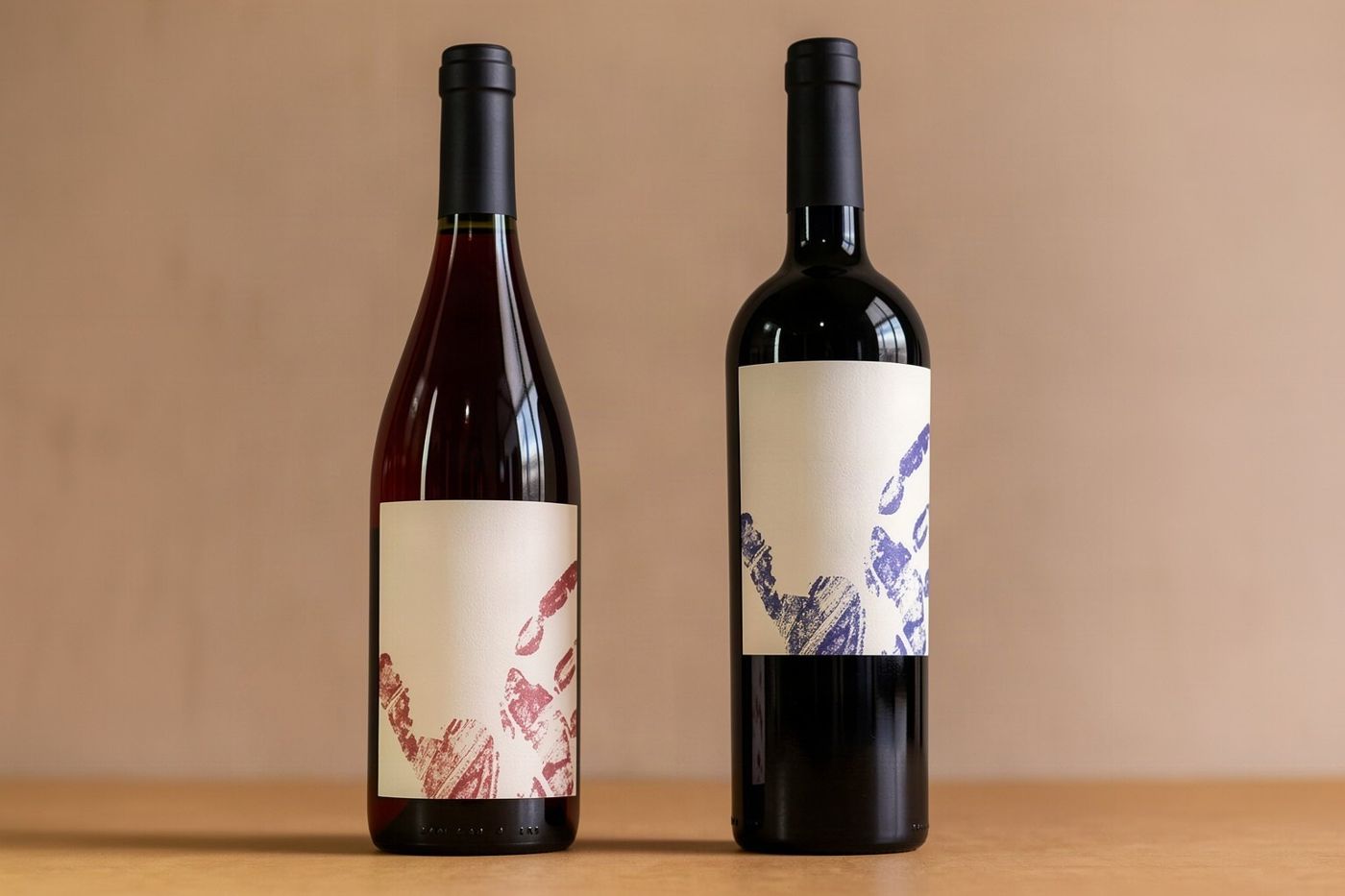 Tinta Negra is the grape used in about nine out of ten bottles of Madeira wine.
Bottles for the kitchen
A recipe that calls for Madeira sends many cooks to the cheapest bottle on the shelf, and the result says more about that bottle than about the wine. Cooking is where a label is read least and matters most.
Some shops abroad sell a madeira cooking wine, often seasoned, that is made for the pan rather than the glass. Whether it carries the protected name is written on the label: the certified wine says Madeira with its denomination and has passed the island institute's analysis. The rules do allow the protected wine to go in bulk to the food industry, in exceptional cases and under special regulations, which is how some products come to use it.
For a sauce, a young medium dry or medium sweet Madeira behaves the way most recipes expect, and it is the same wine you can drink with the meal. A Sercial is drier and sharper; a Malvasia is sweet enough to change a dish, which is sometimes the point.
None of this needs an expensive bottle. The age statements are where the price climbs, and a sauce reduced for twenty minutes will not show the difference between five years and fifteen. Keep the old bottles for the glass.
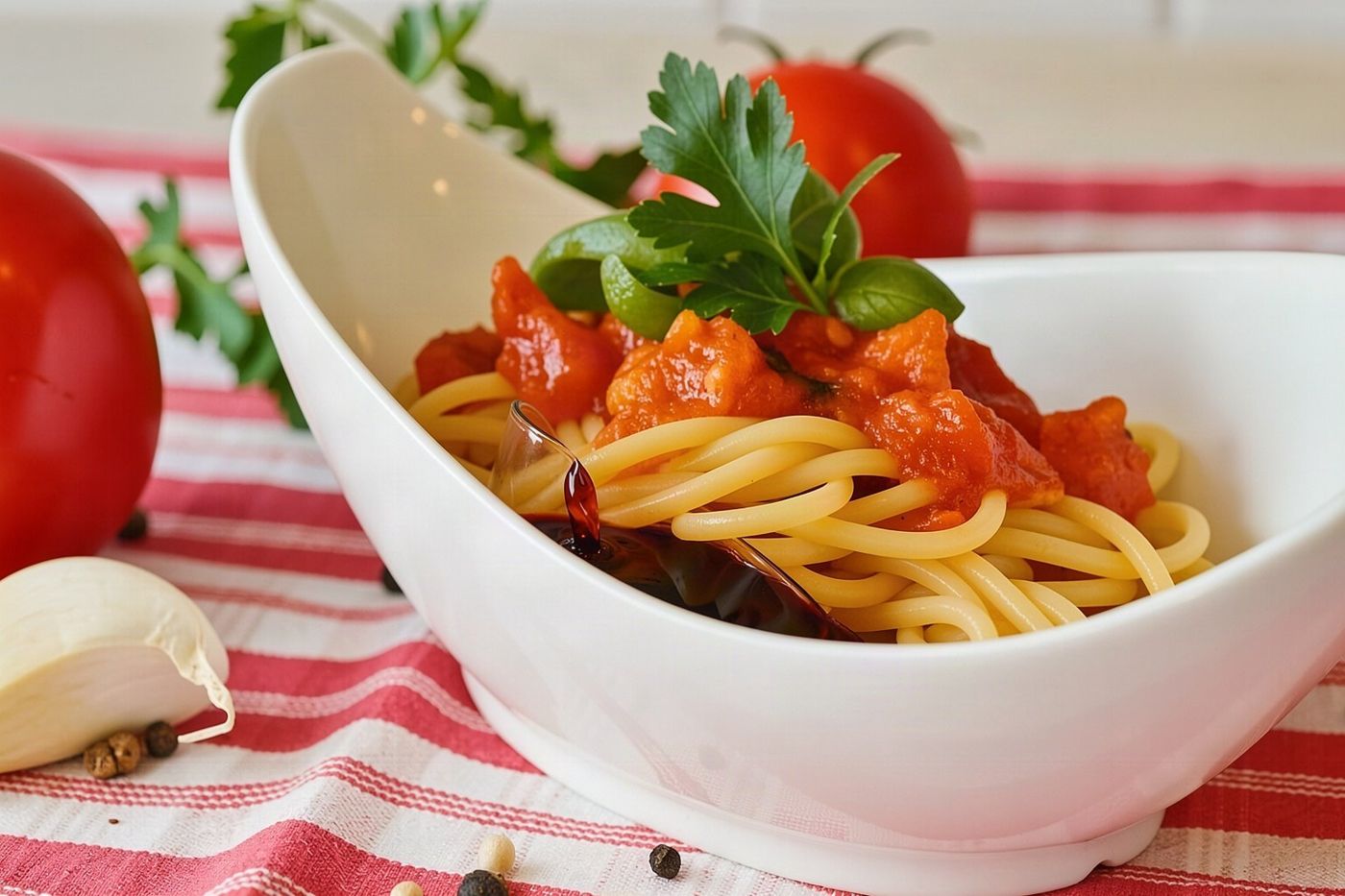 A young medium dry or medium sweet Madeira behaves as expected in recipes.
The island's other drinks
A visitor who comes for the wine often leaves with a bottle of something else, and the two are easily mixed up in the shops. The island makes a rum from its own sugar cane, a cane honey, and poncha, the drink of cane spirit, honey and lemon.
Between madeira wine and spirits made from sugar cane, the regulated names are separate. Rum made on the island has its own protected name, Rum da Madeira, set by a regional decree of 2011 and managed by the same institute that oversees the wine. The Engenho da Calheta, one of the island's oldest sugar-cane mills, still makes rum and cane honey on the south-west coast.
Poncha is a mix, not a protected drink: aguardente de cana, honey and lemon, shaken or stirred in the bar. Câmara de Lobos, the fishing town just west of Funchal, is often called its birthplace; it has a page of its own.
The practical point for a buyer is the label again. A bottle that says Madeira and a grape is wine; a bottle that says Rum da Madeira is rum; a bottle of poncha is a mix made to a recipe, and each house makes its own.
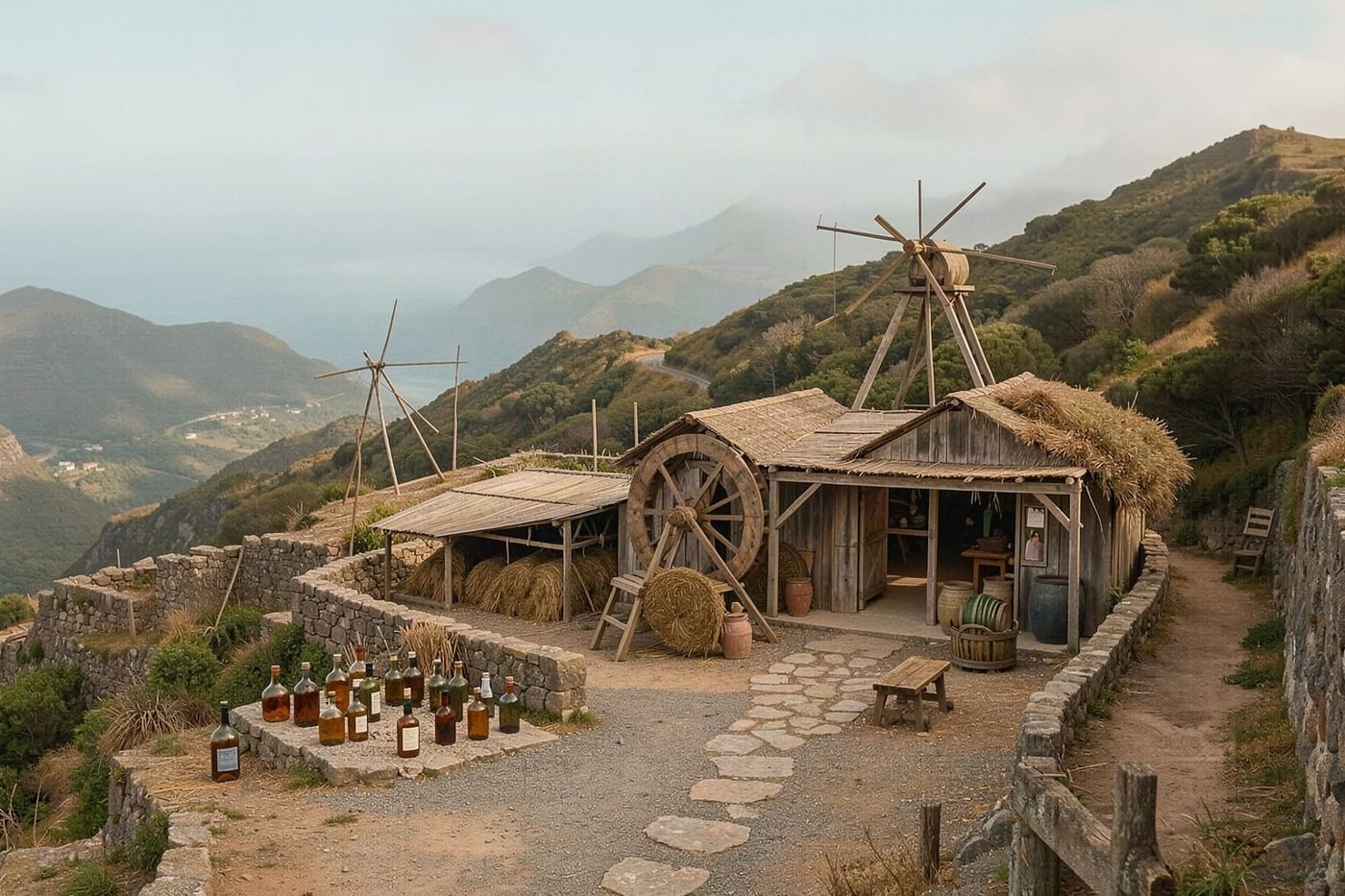 Rum da Madeira has its own protected name set by a regional decree of 2011.
Rainwater, a lighter style
Visitors who find the classic styles heavy often skip the wine altogether, when a lighter one exists. Rainwater is its name, and it is a legal style, not a marketing word.
The rules describe a rainwater madeira wine as pale to gold in colour, with a Baumé level between 1.0° and 2.5°, which puts it in the medium-dry range, and they cap any age statement on it at 10 years. It is a young, lighter Madeira by definition, not an old one.
That makes it a sensible first bottle. It is drier than a Boal or a Malvasia, softer than a dry Sercial, and young enough to be priced below the aged wines. For a reader who wants one bottle to open with friends at home, it is often the easiest place to start.
Other words may appear beside the style, and they are regulated too: Selected or Finest for a wine of outstanding quality for its age, Fine for a balanced wine with the freshness of its acids, Canteiro for a wine that went through the cask process and was never warmed. None of them is a sweetness band, so read them together with the grape or the sweetness word.
Age words on a Madeira label
| On the label | Means |
|---|---|
| Reserva, Velho, Reserve, Old | 5 years |
| Reserva Velha, Reserva Especial, Muito Velho, Special Reserve, Very Old | 10 years |
| Reserva Extra, Extra Reserve | 15 years |
| 20, 30, 40, 50 years, more than 50 | The number of years, confirmed by the tasting panel |
- Means
- 5 years
- Means
- 10 years
- Means
- 15 years
- Means
- The number of years, confirmed by the tasting panel
How strong it is
The strength surprises people who drink Madeira like table wine. The rules put madeira wine abv between 17% and 22% for the wine as sold, with a total strength of at least 17.5%. Only with the institute's authorisation, and exceptionally, may a Madeira be sold at 15.5%.
That strength is what fortification produces. Grape spirit is added during or just after fermentation, and the rules cap how much the added material may raise the total strength. The effect in the glass is a wine served in small measures, sipped rather than drunk, and a bottle that goes further than its size suggests.
For planning a tasting, the numbers matter. A lodge tasting of three or five small samples is a real amount of alcohol at 17% to 22%, and Funchal's lodges are a walk from each other in the centre. Space them out, eat something, and leave the car: the Aerobus and the city buses cover most of what a visitor needs, and the city's streets are steep.
Strength says nothing about sweetness. A dry Sercial and a sweet Malvasia can have the same alcohol; the difference is the sugar the Baumé bands measure.
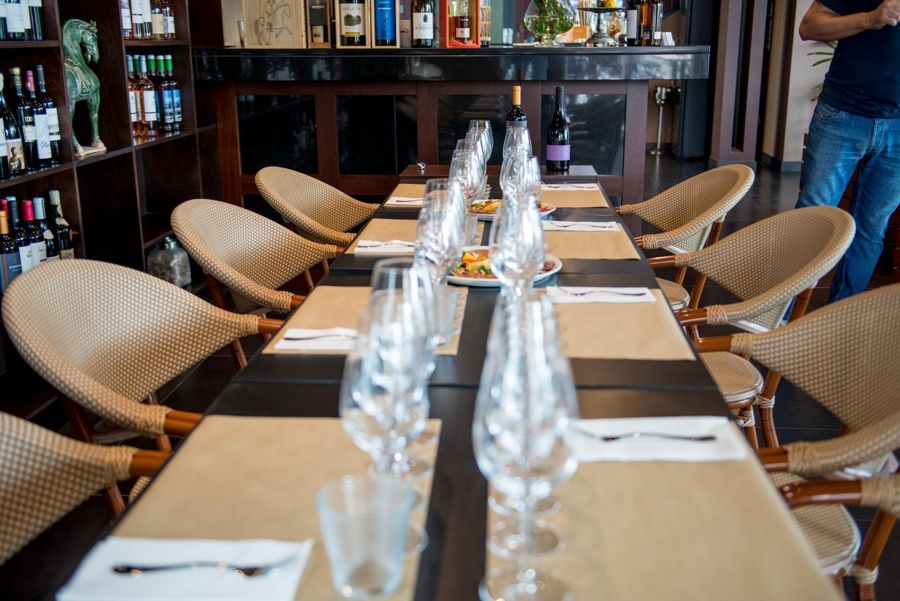
Funchal: Madeira Wine Tasting with Sommelier
★ 4.6 · 109 reviewsA guided tasting of Madeira wines with a sommelier in Funchal.
Tasting it in Funchal
Many visitors plan a tasting as if they needed equipment or knowledge first. They need neither. Nobody has to pack madeira wine glasses: the lodges in the centre pour their samples at the counter and explain what each one is.
Blandy's Wine Lodge, in the trade since 1811, runs guided tours in English every day of the week. Its Premium Tour costs €23 for 45 minutes, with the family museum and three wines; the shorter Lodge Tour is €17 for 30 minutes; the Vintage Premium, at €59, pours five wines including a Frasqueira. Children aged 6 to 17 pay €8.40. Prices and times were checked in September 2026 and change.
Pereira d'Oliveira keeps a tasting room on Rua dos Ferreiros in a building travel guides date to 1619, and those guides describe free weekday tastings without booking; check before you go. The H.M. Borges winery, also in the centre, sells guided tours with a tasting.
Tasting three wines in order of sweetness, from a Sercial to a Malvasia, is the quickest way to learn the scale. Tasting two ages of the same grape shows what time does. Either takes less than an hour.
Colheita, Frasqueira and the age statements
The most expensive mistake is to pay for a vintage when an age statement would have done, or the reverse. The two work differently.
An age statement, 5, 10, 15, 20, 30, 40 or 50 years, or more than 50, describes a blend and its character. The institute's tasting panel must agree that the wine matches the age it claims. The traditional words translate the first three: Reserva or Old for 5 years, Reserva Velha, Special Reserve or Very Old for 10, Reserva Extra or Extra Reserve for 15.
A vintage is a single harvest, and the rules give it three names. A Colheita has aged continuously in cask for at least 5 years. A Frasqueira, also called Garrafeira, comes from one harvest and one of the recommended grapes, was made by the canteiro process and spent at least 20 years in cask, and the label also gives the year it was bottled. A Solera starts from a single-vintage canteiro wine aged at least 5 years, then is topped up by no more than a tenth a year, no more than ten times.
For a first bottle, a 5 or 10 year old of the style you like tells you more than a vintage. Frasqueiras reward a second visit, when you know which grape you prefer.
Single-vintage wines
- Colheita
- One harvest, at least 5 years in cask
- Frasqueira or Garrafeira
- One harvest and one grape, canteiro, at least 20 years in cask
- Solera
- Base wine at least 5 years; topped up at most 10% a year, at most 10 times
Canteiro and estufagem, in practice
The two methods are often described as "good" and "cheap", and the rules do not say that. They say what each process is and how long each takes before a wine can be sold.
Estufagem warms the fortified wine in containers fitted with thermometers, at no more than 50 °C, for at least 3 months. The institute must be told at least 5 working days before the process starts, may take samples and seal the vats, and checks the temperatures. After warming the wine may be bottled only 3 months later at the earliest, and not before 31 October of the second year after the harvest.
Canteiro skips the warming. The wine ages in wooden casks for at least 2 years and cannot be bottled until it has had 3, counted from 1 January after the harvest. The same notice to the institute applies when the process begins and ends.
What this means for a buyer is simple. A young, inexpensive Madeira is usually an estufagem wine, and nothing about that is a fault. The long age statements and every Frasqueira belong to canteiro wines, which is where the years, and the price, come from.
From Funchal: Full-Day Madeira Wine Tour with Lunch
★ 4.9 · 175 reviewsA full day to the island's vineyards and wine producers from Funchal, with lunch.
The Wine Festival
A visitor in late summer can see the harvest instead of only tasting the result. The Madeira Wine Festival ran from 23 August to 13 September in 2026, in the streets of Funchal and in vineyards and cellars around the island, and the tourism board's festival page publishes the programme each year.
In the city, the Madeira Wine Lounge at Praça do Povo pours wines with food and regional music. In the countryside, the Estreito de Câmara de Lobos harvest festival, in the first half of September, recreates the picking and treading of the grapes. Evening concerts in wineries pour wine made on site after the heat of the day.
The dates move each year, so check the programme before building a trip around them. The festival has a page of its own, with what happens where.
Outside the festival, the rules still do the work. Every bottle that carries the protected name has passed the regional wine institute, IVBAM, whose analysis stands behind the label, and the tourism board lists the lodges and wine experiences that welcome visitors through the year.
Common questions
Is Madeira wine sweet?
Not all of it. The rules define five sweetness bands, from extra dry to sweet, and tie each classic grape to one: Sercial is dry or extra dry, Verdelho medium dry, Boal medium sweet and Malvasia sweet.
What does Colheita mean on a Madeira label?
A wine from a single harvest that has aged continuously in cask for at least 5 years. A Frasqueira is also a single harvest, but from one recommended grape, canteiro-made and aged at least 20 years in cask.
What is the difference between canteiro and estufagem?
Canteiro wine ages in wooden casks for at least 2 years and is never warmed. Estufagem wine is warmed at no more than 50 °C for at least 3 months before it rests.
Can I buy Madeira wine from a barrel in Funchal?
Not as certified Madeira. The protected wine may not be sold in bulk to the public and may be bottled only in glass.