Some links on this page are affiliate links: if you book through them, we may earn a commission at no extra cost to you. How this works
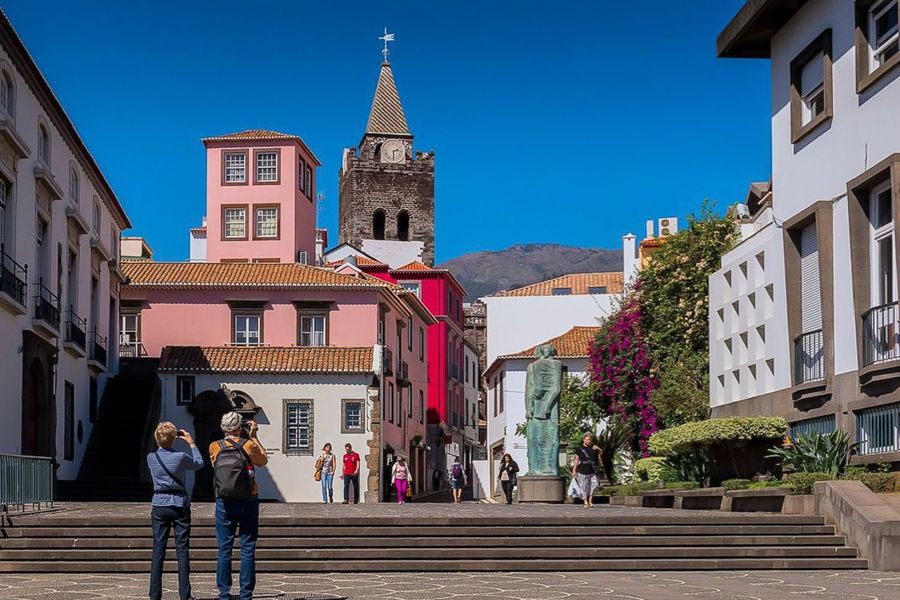
Visitors arriving in Funchal usually ask where the old town is, and whether it is worth a whole day. It is the Zona Velha, at the eastern end of the seafront, and it rewards a slow half day more than a quick walk-through.
Its spine is Rua de Santa Maria, a narrow cobbled street of old merchant houses, restaurants and bars, where about 200 doors have been painted by artists as part of the Arte Portas Abertas project. Around it are the yellow Forte de São Tiago, two museums of the island's history, sea pools and small beaches below the old walls, and, at its edges, the Mercado dos Lavradores and the lower station of the cable car to Monte.
It is also a dense corner for eating out, with 96 restaurants within 450 m of Rua de Santa Maria.
The old town with a guide, on foot or by tuk-tuk.
 Most reviewed
 Tuk-tuk
Funchal: Guided Old Town Tuk Tuk Tour
The old town and the slopes above it, without the climb
Rua de Santa Maria and the painted doors
The common mistake is to walk the seafront and never turn into the street behind it. Rua de Santa Maria is the old town.
It is a narrow, cobbled street lined with restaurants, bars and old merchant houses, running east through the historic area of Funchal. Its best-known feature is its doors. Under the Arte Portas Abertas project, about 200 of them have been painted, the doors of abandoned houses, shops and run-down spaces given new life, turning the oldest part of the city into a permanent open-air gallery. Among the contributors are the architect Paulo David and the decorator Nini Andrade Silva, two of the best-known names in Madeiran design.
The doors are best seen in daylight. Walk it slowly from west to east and back.
At the eastern end, Rua de Santa Maria reaches the Socorro viewpoint, at number 276, above the sea.
The Zona Velha in numbers
- Painted doors
- About 200 on Rua de Santa Maria
- Restaurants within 450 m
- 96
- Monuments and museums
- 5 monuments, 4 museums
- Beaches and sea pools
- 5
- Blue Flag 2026
- Barreirinha
The fort and the museums
Visitors often see the yellow fort from the seafront and assume they can walk in. Check before you go.
The Forte de São Tiago is the large yellow fort at the eastern end of the old town, built in the 17th century to defend the city from pirate attacks; its construction is dated to 1614. It stands on Travessa do Forte, above the sea pools. It is listed as temporarily closed, so check its status on the day.
Two museums tell the island's story. The Madeira Story Centre, on Rua Dom Carlos I, is a modern museum of Madeira's history with interactive exhibits, and a bistro with a terrace. The Museu de Electricidade Casa da Luz, on Rua Casa da Luz, is a small museum of the island's electricity, with vintage equipment.
The monuments are small but many: the Zona Histórica itself, the sculptures of the footballer and of the Madeiran embroiderer, and the monument to 500 years of the Diocese of Funchal.
Sights of the Zona Velha
| Place | What it is | Rating |
|---|---|---|
| Zona Histórica do Funchal | Historic area, Rua de Santa Maria | 4.6 from 2,296 reviews |
| Forte de São Tiago | 17th-century fort | 4.2 from 2,379 reviews |
| Madeira Story Centre | Museum of Madeira's history | 4.1 from 2,322 reviews |
| Museu de Electricidade Casa da Luz | Museum of electricity | 4.4 from 733 reviews |
| Praia da Barreirinha | Bathing area, Blue Flag 2026 | 4.4 from 272 reviews |
| Praia de São Tiago | Sea pool by the fort | 4.4 from 149 reviews |
| Socorro Viewpoint | Viewpoint at the end of Rua de Santa Maria | 4.8 from 40 reviews |
- What it is
- Historic area, Rua de Santa Maria
- Rating
- 4.6 from 2,296 reviews
- What it is
- 17th-century fort
- Rating
- 4.2 from 2,379 reviews
- What it is
- Museum of Madeira's history
- Rating
- 4.1 from 2,322 reviews
- What it is
- Museum of electricity
- Rating
- 4.4 from 733 reviews
- What it is
- Bathing area, Blue Flag 2026
- Rating
- 4.4 from 272 reviews
- What it is
- Sea pool by the fort
- Rating
- 4.4 from 149 reviews
- What it is
- Viewpoint at the end of Rua de Santa Maria
- Rating
- 4.8 from 40 reviews
The sea below the walls
People often think Funchal has no beaches. The old town has several small ones, and sea pools.
Below the fort, Praia de São Tiago is an outdoor sea pool, open daily from 09:00 to 20:00. Further east, Praia da Barreirinha, at Largo do Socorro, opens from 09:00 to 19:00 on weekdays and to 20:00 at weekends, and carries a Blue Flag in 2026. Between them, the complex of the Barreirinha and the small Praia do Almirante Reis, by the garden of the same name, complete the waterfront.
These are pebble and rock beaches and bathing platforms rather than sand, which is typical of Madeira. The sea at Funchal is warmest from June to October, above 20 °C, peaking at about 22.9 °C in September.
A morning on the old town's waterfront, a swim, and lunch on Rua de Santa Maria make an easy day without transport.
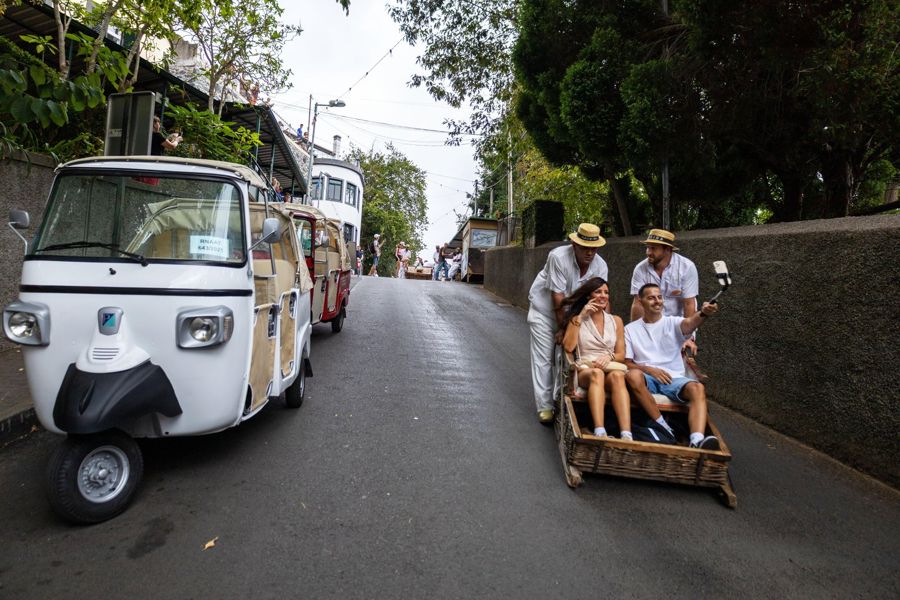
Funchal: Guided Tuk Tuk Tour to Toboggan Rides & Old Town
★ 4.9 · 968 reviewsThe old town and the Monte toboggan by tuk-tuk, from central Funchal.
Where to eat
The mistake is to eat at the first table offered on the street. With 96 restaurants within 450 m, there is room to choose.
The most reviewed include A Bica, on Rua Hospital Velho, rated 4.5 from 3,588 reviews; the Restaurante Taberna Ruel, on Rua de Santa Maria, 4.3 from 3,445; Sunrise Asian Fusion, 4.9 from 3,169; Taberna Madeira, 4.5 from 2,870; and the Bela 5 Snack Bar, 4.8 from 2,590. Chef Guru Indian Restaurant has 4.9 from 2,369 reviews, and the Peixaria no Mercado, by the market, 4.5 from 1,721.
For a quieter meal, eat early or look one street back from Rua de Santa Maria.
For the island's dishes, espetada, beef on a laurel skewer, bolo do caco, the garlic-butter flatbread, and black scabbardfish with banana are the ones every guide names. The guide to eating in Funchal covers them.
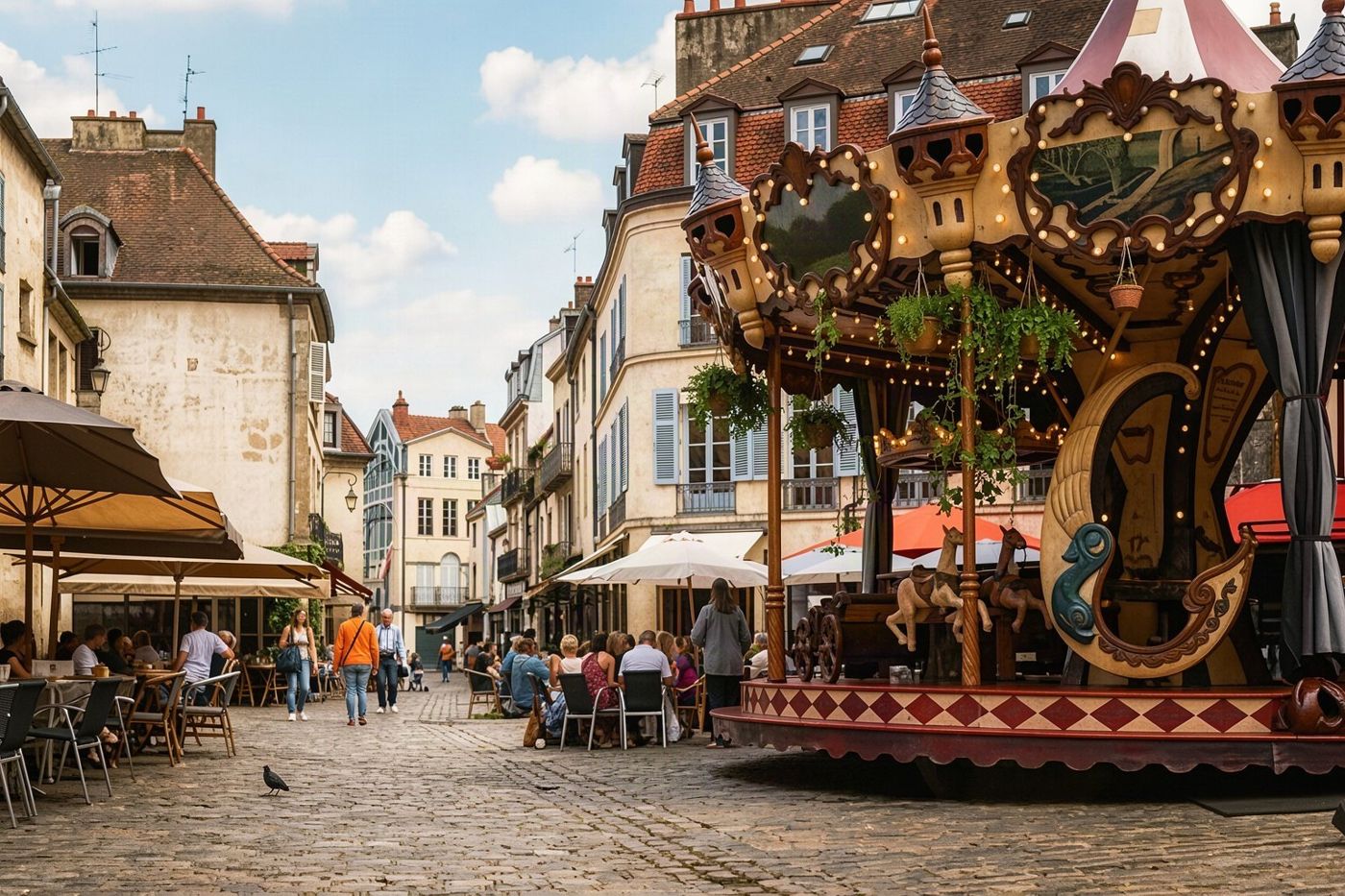 The Zona Velha district offers a concentration of highly rated restaurants serving local dishes like espetada and bolo do caco.
The market and the cable car
People often visit the old town, the market and Monte on three separate days. They are next to each other.
The Mercado dos Lavradores, opened in 1940, stands at the old town's western edge. It opens Monday to Friday from 07:00 to 19:00 and on Saturday from 07:00 to 14:00, and closes on Sundays and public holidays; the fish hall, the fruit and the flowers are its sights.
The lower station of the Funchal-Monte cable car is in the Zona Velha too. The cable car climbs to Monte, €16 one way or €22 return, daily from 09:00 with the last boarding at 17:45; at the top are the Monte church, the Monte Palace gardens and the toboggans down to Livramento.
So a single day can link all three: the market in the morning, the cable car to Monte and back by toboggan and taxi, and the old town for the evening.
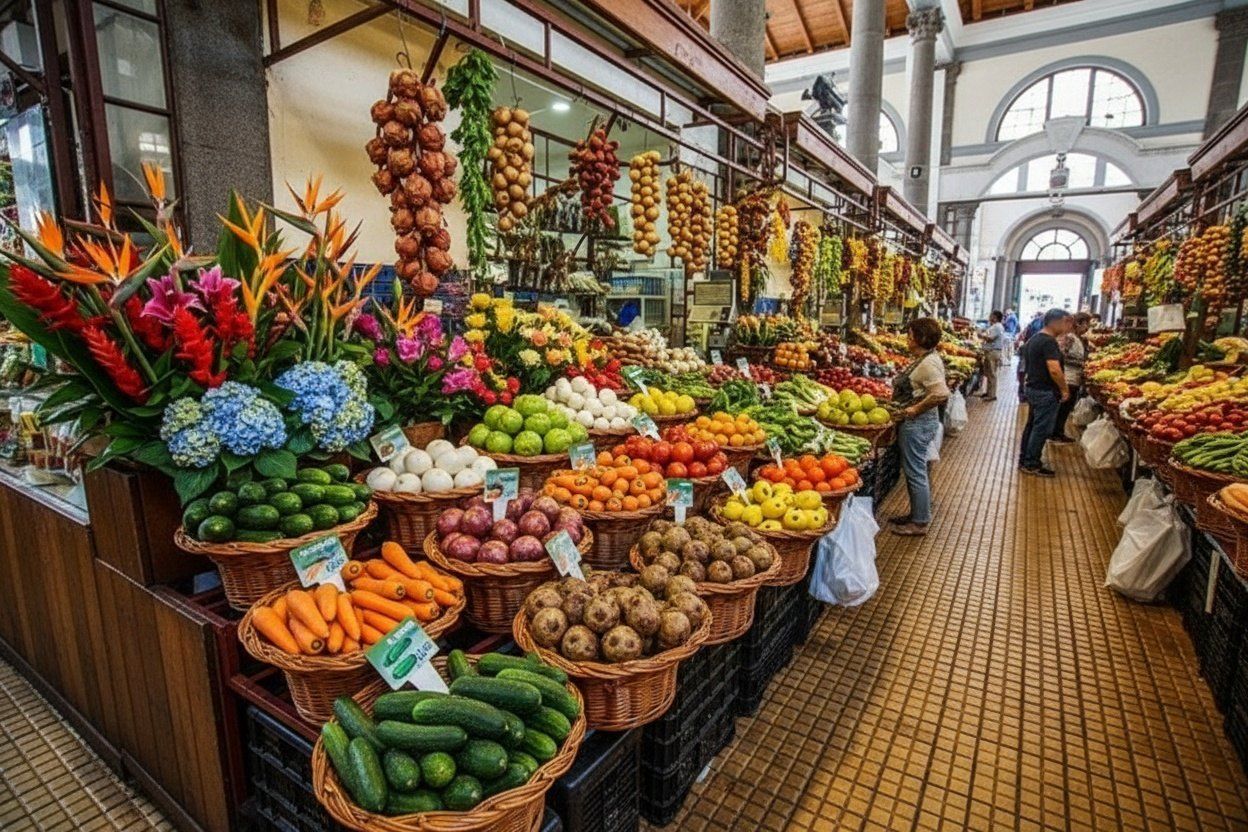 Opened in 1940, the Mercado dos Lavradores is located at the western edge of the old town and operates daily except Sundays.
Staying in the old town
Visitors often book a room on Rua de Santa Maria for the atmosphere without weighing the evenings.
The Zona Velha is lively, packed with restaurants and bars, which is its appeal for an evening and its drawback for sleep. It is also cramped and pricey to stay in. For a stay close to it but quieter, the hills just above, towards Santa Luzia, are calmer and cheaper, with better views, but steep.
The old town is on the seafront, so the rest of central Funchal is a short walk west: the cathedral, Avenida Arriaga and the marina. Accommodation in Funchal adds the municipal tourist tax of €2 per guest per night for visitors over 12, for at most 7 nights.
For the choice of area, the guide to Funchal's neighbourhoods sets the old town beside the others.
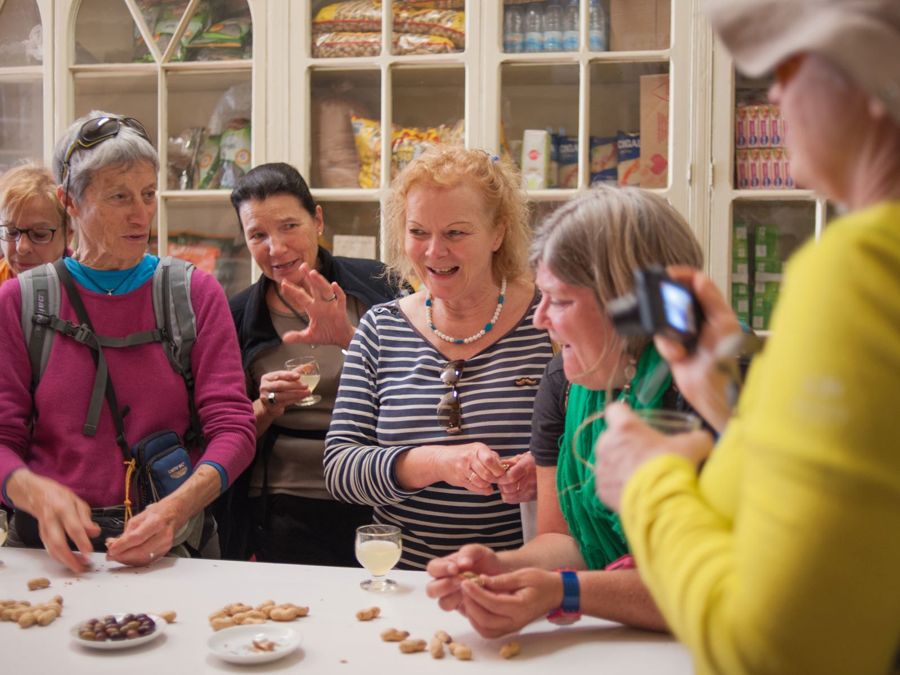
Madeira: Food and Wine Walking Tour in Funchal
★ 4.8 · 517 reviewsA food and wine walking tour of Funchal, with the old town's tastes.
Planning a visit
The mistake is to see the old town only by night. Its doors and its fort are daytime sights.
A good half day starts at the market in the morning, walks east along Rua de Santa Maria for the doors, stops at the Madeira Story Centre or the fort, and ends at the sea pools or the Socorro viewpoint. Come back in the evening for dinner, when the street is at its liveliest.
It is best on foot: the streets are narrow, and parking in the centre is paid, from €0.54 to €1.83 an hour depending on the zone.
The Visit Funchal page on the painted doors has the project's background, and the cable car's site the prices and hours. For the rest of the city, see the neighbourhoods guide.
Common questions
Where is Funchal's old town?
At the eastern end of the seafront, around Rua de Santa Maria, between the Mercado dos Lavradores and the Forte de São Tiago.
What are the painted doors?
The Arte Portas Abertas project: about 200 doors on Rua de Santa Maria painted by artists, turning the oldest part of the city into an open-air gallery.
Can you swim in the old town?
Yes: Praia de São Tiago is a sea pool by the fort, and Praia da Barreirinha, with a 2026 Blue Flag, is at Largo do Socorro.
Is the old town a good place to stay?
Lively and central, but cramped and pricey to stay in; the hills above, towards Santa Luzia, are quieter and cheaper.