Some links on this page are affiliate links: if you book through them, we may earn a commission at no extra cost to you. How this works
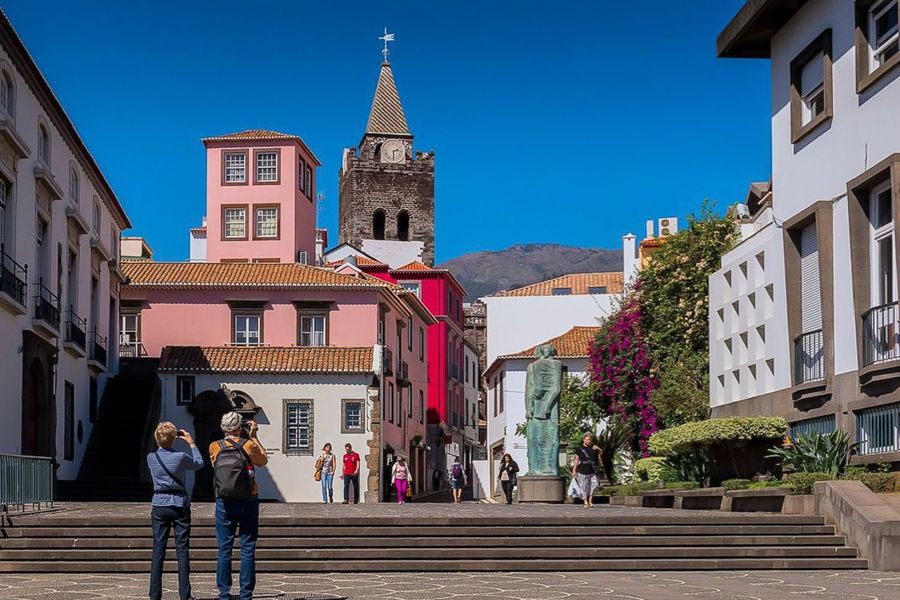
Visitors in Funchal often say they are going "into the centre" without knowing where it begins. It begins at the Sé, the cathedral, and the few streets around it hold more of the city's sights than anywhere else.
The Sé, inaugurated in 1514, stands at the heart of a grid of streets that runs from the seafront up to the town square, Praça do Município, with the town hall and three museums close by: sacred art, sugar and the military. Avenida Arriaga, the main avenue, crosses the centre with the Municipal Garden, the stage of the Flower Festival's walls and carpets, of the Carnival parades and of the jazz festival's first nights. Below it, the seafront avenue leads west to the marina and east to the old town.
It is the densest part of the city: 171 listed places lie within 500 m of the cathedral, 149 of them restaurants. The cathedral is closed to visits on Sundays and holidays, so keep a weekday for the centre and its museums.
The centre with a guide, on foot or with tastings.
 Most reviewed
 Food and wine
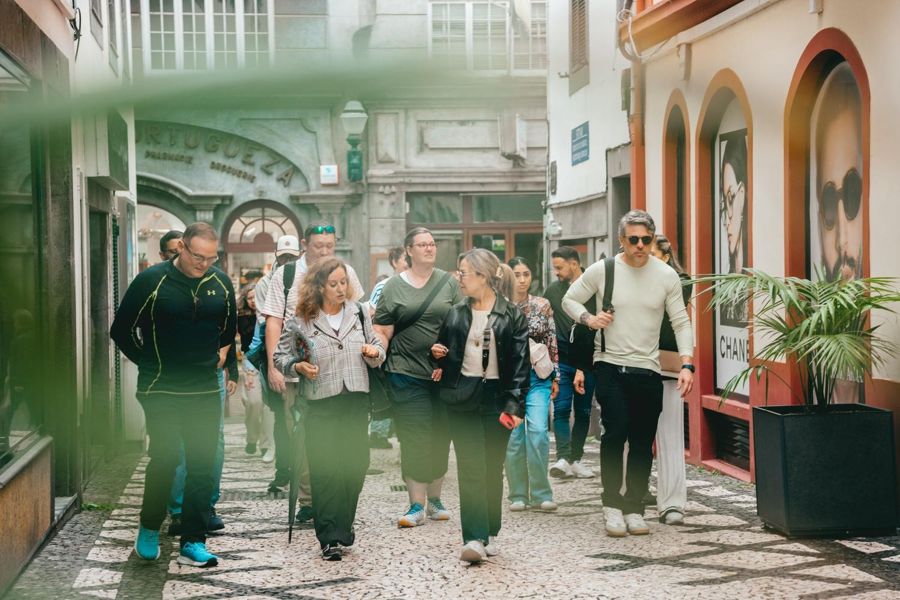
Taste Funchal: food, wine and cultural tour
The centre through its food and Madeira wine
The cathedral
The common mistake is to walk past the plain front of the Sé and miss what is inside. The treasure is the ceiling.
The cathedral was commissioned in the reign of King Manuel I and inaugurated in 1514. Over time it took on features of the Manueline and the Gothic styles. Its central Gothic portal, with eight archivolts in a pointed arch, is carved from stone from Cabo Girão, the cliff west of the city. Inside, the ceiling is a fine example of Mudéjar decoration in the island's own cedar, considered one of the most beautiful ceilings in Portugal.
Entry to the cathedral is free. The tower is a separate, paid visit, with tickets at the shop by the main door, on weekdays from 10:00 to 12:45 and from 14:00 to 17:00. The cathedral is closed to visits on Sundays and public holidays.
It stands on Rua do Aljube, in the middle of the centre, a few minutes from the seafront, the market and Avenida Arriaga.
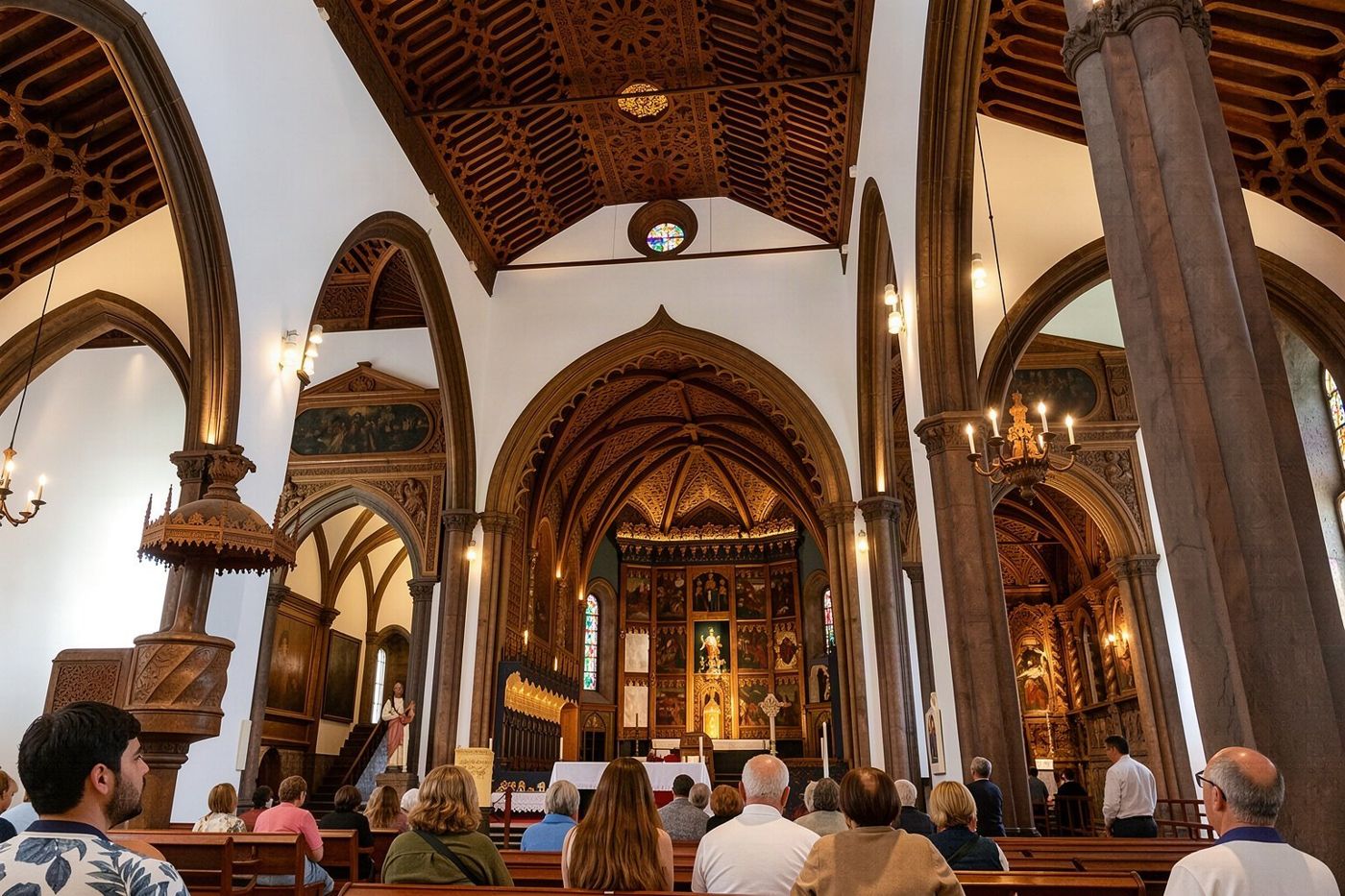 The cathedral ceiling is a fine example of Mudéjar decoration in the island's own cedar.
The town square and its museums
Visitors often find the square by chance and do not realise the museums around it. Three are within a few minutes' walk.
Praça do Município, the town square, is the formal heart of the city, with the town hall, the Paços do Concelho, on its side, at Largo do Colégio dos Jesuítas. It is rated 4.6 from 1,097 reviews.
The Sacred Art Museum of Funchal, on Rua do Bispo, holds sacred art from the Renaissance onwards, including Flemish paintings; it is rated 4.5 from 500 reviews. The Museum of the City of Sugar, on Praça de Colombo, is an archaeological museum of the island's sugar era. The Madeira Military Museum is at Largo da República.
Closer to the sea are the Pelourinho archaeological site, on the site of the Forte de São Filipe, and the statue of João Gonçalves Zarco, the navigator who reached the island, on Avenida Zarco. The museums guide covers them all.
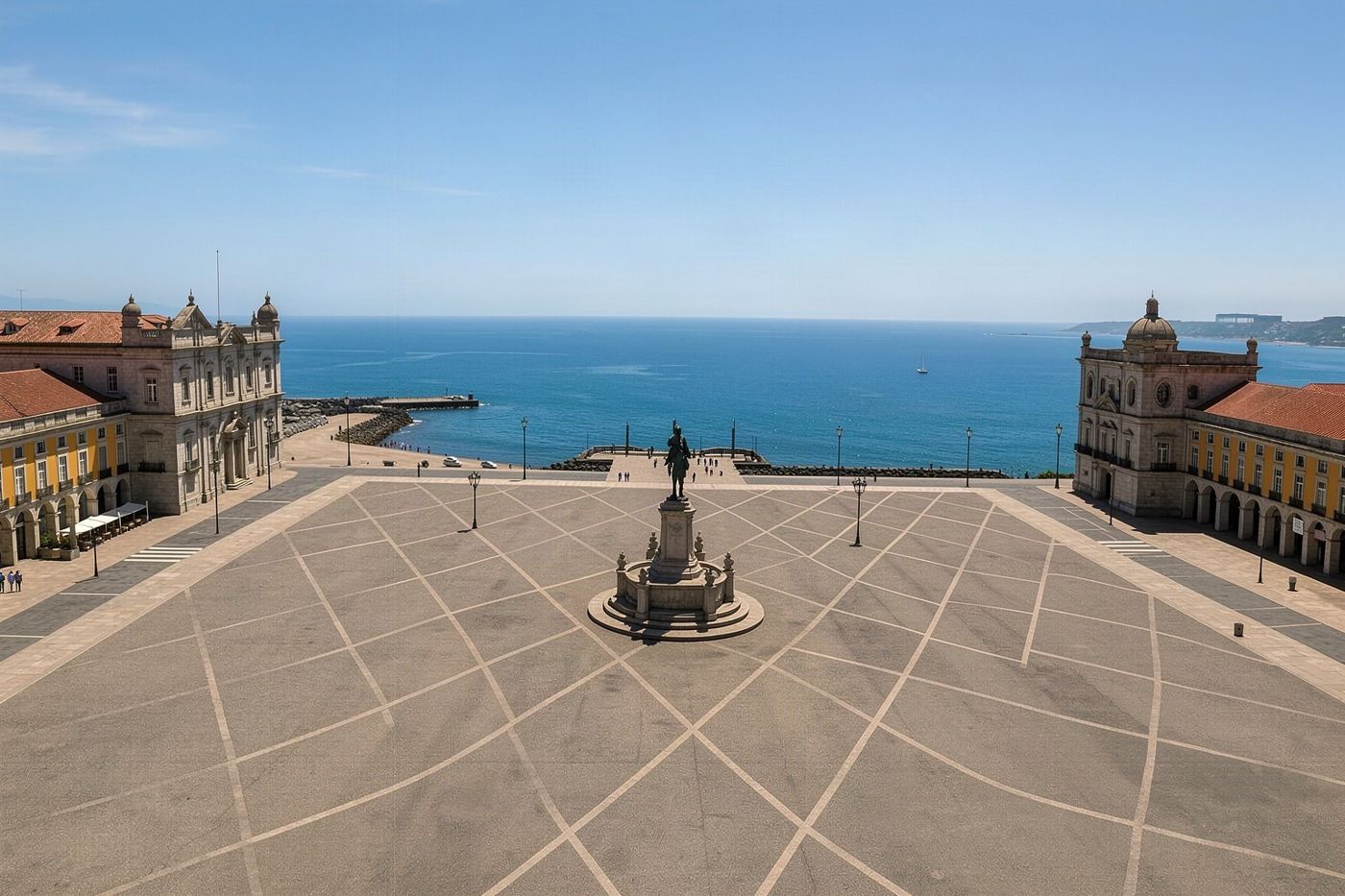 The Paços do Concelho stands beside the Cathedral at Largo do Colégio dos Jesuítas.
Avenida Arriaga and the Municipal Garden
The mistake is to cross Avenida Arriaga on the way to somewhere else. For much of the year, it is where the city's festivals happen.
Avenida Arriaga is the main avenue of the centre, with the Municipal Garden along it. During the Flower Festival, its central walkways hold the Wall of Solidarity, a wall of flowers, and the flower carpets are laid along it. In Carnival, the children's parade runs along it to the Municipal Garden. In early July, the garden's auditorium hosts the free first nights of the Funchal Jazz Festival. And on New Year's Eve, the Placa Central, its central walkway, is the heart of the street entertainment.
The rest of the year, the avenue is simply the centre's main street: cafés, shops, the garden's shade and a short walk to the Sé, the market and the seafront.
For the festivals and their dates, see the festivals calendar.
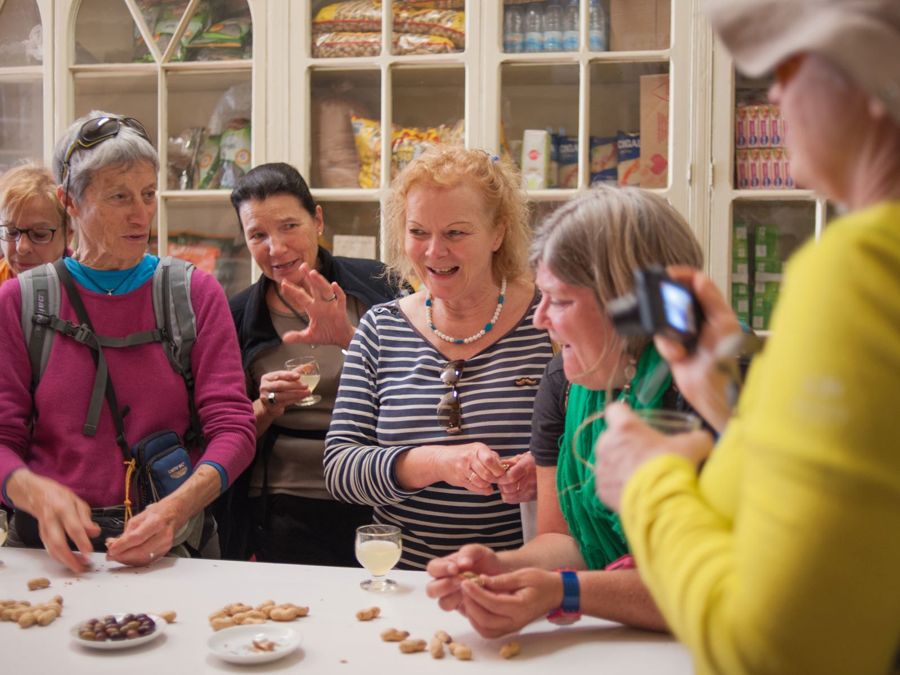
Madeira: Food and Wine Walking Tour in Funchal
★ 4.8 · 517 reviewsA food and wine walking tour through central Funchal.
Where to eat
People often think the best food is only in the old town. The centre has more restaurants than any other part of the city.
There are 149 restaurants within 500 m of the cathedral. Among the most reviewed are Restaurante Informal, on Rua dos Murças, rated 4.7 from 2,910 reviews; Akua, on the same street, 4.7 from 2,738; Casa do Bolo do Caco, 4.4 from 2,526, named for the island's garlic-butter flatbread; Kampo by Chef Julio Pereira, 4.7 from 2,492; and CIAO Pizzeria, 4.9 from 2,087. Armazém do Sal, listed in the Michelin Guide 2024, is rated 4.3 from 1,877. The Ritz Madeira has 4.2 from 3,714 reviews.
Rua dos Murças, with two of the best-rated, is a good street to start. For Madeiran dishes, look for espetada, beef on a laurel skewer, and black scabbardfish with banana.
The guide to eating in Funchal covers the island's food.
The Sé in numbers
- Places within 500 m of the cathedral
- 171, the densest area of the city
- Restaurants
- 149
- Monuments
- 16
- Museums
- 6
- The cathedral
- Inaugurated in 1514, free to enter
Monuments and statues
Visitors often walk through the centre and see the statues without their stories. There are 16 monuments within 500 m of the cathedral.
The best known are in the squares: Praça do Município with the town hall, Praça da Autonomia by the seafront, where the Carnival and Trapalhão parades end, and the statue of Zarco on Avenida Zarco. The sculpture of Józef Piłsudski, the Polish statesman, stands in the centre and is rated 4.7 from 226 reviews.
Most of them are outdoors and free, and most are on the streets near the sea, so a walk from the cathedral to Praça da Autonomia and back takes them in.
The monuments guide covers each one.
Sights around the Sé
| Place | What it is | Rating |
|---|---|---|
| Praça do Município | The town square, with the town hall | 4.6 from 1,097 reviews |
| Sacred Art Museum of Funchal | Renaissance sacred art, Flemish paintings | 4.5 from 500 reviews |
| Józef Piłsudski sculpture | Sculpture | 4.7 from 226 reviews |
| Praça da Autonomia | Square by the seafront | 4.5 from 198 reviews |
| Paços do Concelho | The town hall | 4.6 from 166 reviews |
| Museum of the City of Sugar | Archaeological museum | 3.9 from 163 reviews |
| Madeira Military Museum | Military museum | 4.0 from 147 reviews |
| João Gonçalves Zarco statue | Sculpture | 4.4 from 133 reviews |
- What it is
- The town square, with the town hall
- Rating
- 4.6 from 1,097 reviews
- What it is
- Renaissance sacred art, Flemish paintings
- Rating
- 4.5 from 500 reviews
- What it is
- Sculpture
- Rating
- 4.7 from 226 reviews
- What it is
- Square by the seafront
- Rating
- 4.5 from 198 reviews
- What it is
- The town hall
- Rating
- 4.6 from 166 reviews
- What it is
- Archaeological museum
- Rating
- 3.9 from 163 reviews
- What it is
- Military museum
- Rating
- 4.0 from 147 reviews
- What it is
- Sculpture
- Rating
- 4.4 from 133 reviews
Staying in the centre
The mistake is to stay far out to save money and spend it on taxis. The centre puts everything on foot.
A room near the Sé puts the cathedral, the market, the old town, the marina and Avenida Arriaga within a short walk, and the Aerobus from the airport stops on Avenida do Mar, on the seafront. Most of the city's festivals happen within walking distance.
The trade-offs are those of any city centre: busier evenings near the restaurant streets, and paid street parking, from €0.54 to €1.83 an hour depending on the zone, if you bring a car. For something calmer, São Pedro, just to the west, is central but quieter.
Accommodation in Funchal adds the municipal tourist tax of €2 per guest per night for visitors over 12, for at most 7 nights.
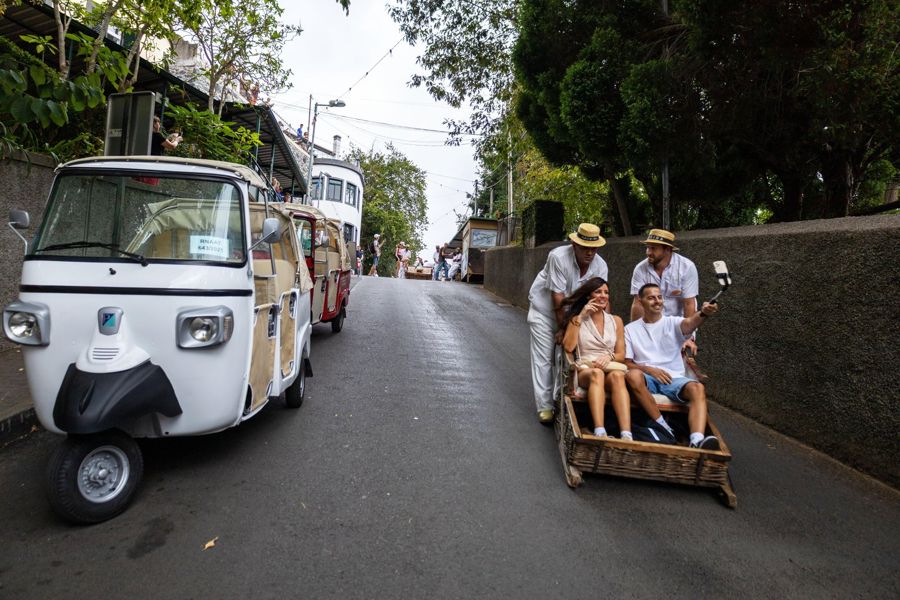
Funchal: Guided Tuk Tuk Tour to Toboggan Rides & Old Town
★ 4.9 · 968 reviewsThe old town and Monte by tuk-tuk, a short plan from the centre.
Planning a visit
The mistake is to leave the cathedral for a Sunday. It is closed to visits then.
A morning in the centre starts at the Sé, on a weekday for the tower, and walks up to Praça do Município and the Sacred Art Museum. Continue along Avenida Arriaga and the Municipal Garden, then down to the seafront at Praça da Autonomia. Lunch in the streets between the cathedral and the market leaves the afternoon for the old town, a few minutes east.
The centre is best on foot; the city buses, €1.45 on a pre-paid GIRO card or €2.05 on board, reach the rest of Funchal.
The cathedral's own site has the hours, and the Visit Funchal page on the Sé its history. For the other parts of the city, see the neighbourhoods guide.
Common questions
Is the Funchal cathedral free?
Yes, entry is free. The tower is a paid visit on weekdays, and the cathedral is closed to visits on Sundays and holidays.
When was the Sé built?
It was commissioned in the reign of King Manuel I and inaugurated in 1514.
What is special about the cathedral?
Its Mudéjar ceiling of island cedar, considered one of the most beautiful in Portugal, and its Gothic portal of Cabo Girão stone.
Is the centre a good place to stay?
It puts everything on foot, including the Aerobus stop on Avenida do Mar; São Pedro, to the west, is quieter.